Content
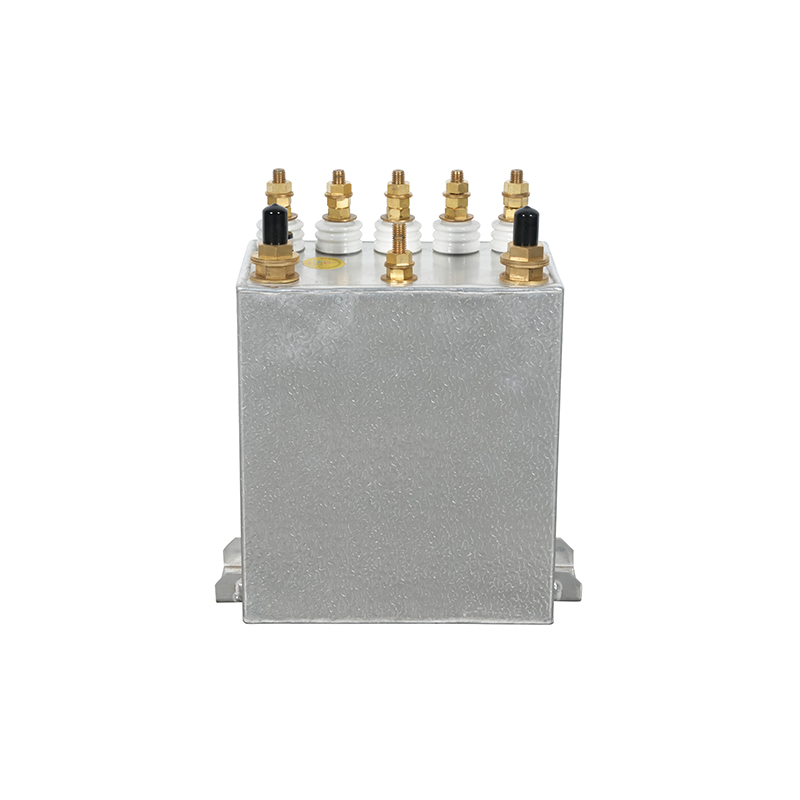
1. In mid-frequency induction applications, the efficiency of RFM 3300V 7350KVar 1500Hz Metallized Film Heating Capacitors is strictly limited by the AC resistance (Rac) of internal conductors.
2. When evaluating how busbar geometry mitigates skin effect losses, engineers must consider that at 1500Hz, current tends to flow within a thin peripheral layer of the copper conductor, specifically a skin depth of approximately 1.7 mm.
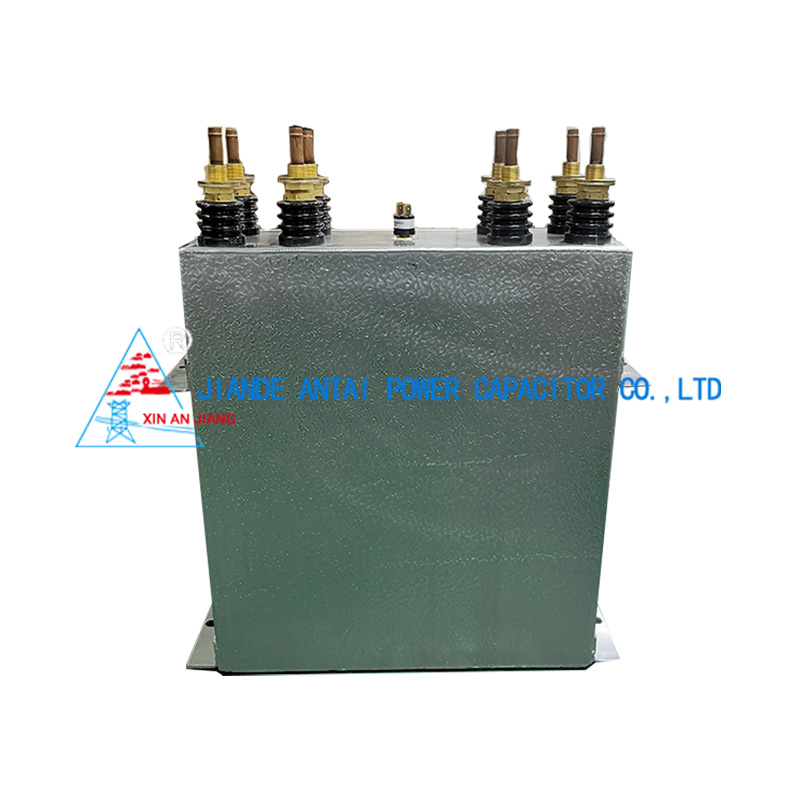
3. To maintain the 7350KVar power rating, a RFM 3300V 7350KVar 1500Hz Metallized Film Heating Capacitors utilizes hollow or flat-strap busbar architectures to increase the effective surface-to-volume ratio.
4. The impact of 1500Hz frequency on capacitor dissipation factor is non-linear; by optimizing the conductor cross-section, the internal heat generation is localized and more easily extracted through the cooling system.
1. Calculating the coolant flow rate for 7350KVar heating capacitors involves a heat load analysis where the water must remove approximately 0.2 to 0.5 Watts per KVar of reactive power.
2. Investigating why metallized film self-healing is critical in heating capacitors reveals that the 3300V dielectric stress requires a robust mechanism to clear localized faults without propagating a total insulation failure.
3. In an RFM 3300V 7350KVar 1500Hz Metallized Film Heating Capacitors, the internal copper tubes must achieve a specific Ra surface finish to prevent laminar boundary layer thickening, which would reduce the convective heat transfer coefficient.
4. The benefits of segmented metallization in mid-frequency capacitors include improved safety margins, as the capacitor elements are divided into thousands of fused cells that act as individual safety valves during transient overvoltages.
1. Testing the ripple current capacity of 3300V metallized capacitors ensures the internal contact points can withstand the Lorentz forces generated by high-intensity magnetic fields at 1500Hz.
2. The influence of capacitance tolerance on smelting resonance stability is vital for the induction furnace; a tight tolerance of plus/minus 5 percent ensures the power supply remains locked to the tank circuit's natural frequency.
3. The stainless steel tank provides the necessary tensile strength to house the heavy element stack and withstand the hydraulic pressure of the cooling circuit, typically rated for 4 bars.
4. Performance metrics for mid-frequency busbar optimization:
| Design Factor | Standard Solid Busbar | Optimized RFM 3300V 7350KVar 1500Hz Metallized Film Heating Capacitors Busbar |
| Conductor Geometry | Solid Rectangular | Hollow Copper Tube / Laminated Strap |
| AC/DC Resistance Ratio | High (> 2.5) | Low (< 1.2) |
| Cooling Integration | External Only | Internal Direct-Water Cooling |
| Skin Effect Mitigation | Passive | Active Geometry Optimization |
1. Evaluating the partial discharge inception voltage of RFM capacitors confirms that the vacuum-impregnated oil-film system remains stable even when subjected to 1500Hz harmonic distortions.
2. How resin density affects DC capacitor life expectancy is often compared to AC heating units; for the RFM series, the focus is on the thermal conductivity of the potting compound to ensure the "hot spot" temperature does not exceed 85 degrees Celsius.
3. Optimizing the MTBF of 7350KVar heating capacitors requires a balance between voltage stress (Volts per micron) and effective cooling of the metallized edges where current density is highest.
1. Why is 1500Hz considered 'Mid-Frequency' for these capacitors?
In induction melting, 1500Hz requires specialized RFM 3300V 7350KVar 1500Hz Metallized Film Heating Capacitors because standard power frequency (50/60Hz) capacitors would overheat due to the skin effect in their internal leads.
2. How does the self-healing process affect the 7350KVar rating?
Each self-healing event slightly reduces the total active electrode area. Over time, this leads to a minor capacitance drop, but the RFM 3300V 7350KVar 1500Hz Metallized Film Heating Capacitors is designed to operate within spec for up to 100,000 hours despite these micro-clearances.
3. What is the maximum inlet water temperature for the cooling circuit?
Inlet water should typically not exceed 35 degrees Celsius to ensure sufficient thermal gradient for the 7350KVar load.
4. Does the Ra surface finish of the terminals impact electrical loss?
Yes, a high Ra surface finish (smoother) on terminal blocks reduces contact resistance, which is critical when carrying currents that can exceed 2000 Amperes.
5. Can these capacitors be used at higher frequencies, like 3000Hz?
Usage at 3000Hz would double the skin effect losses and likely exceed the thermal limits of the 1500Hz-optimized busbars. Always consult the frequency-derating curve.
1. IEC 60110-1: Power capacitors for induction heating installations - General.
2. IEEE Std 18: IEEE Standard for Shunt Power Capacitors.
3. ASTM B188: Standard Specification for Seamless Copper Bus Tube for Electrical Purposes.
Contact Us
News center
May - 2026 - 26
information
Tel: +86-571-64742598
Fax: +86-571-64742376
Add: Zhangjia Industrial Park, Genglou Street, Jiande City, Zhejiang Province, China