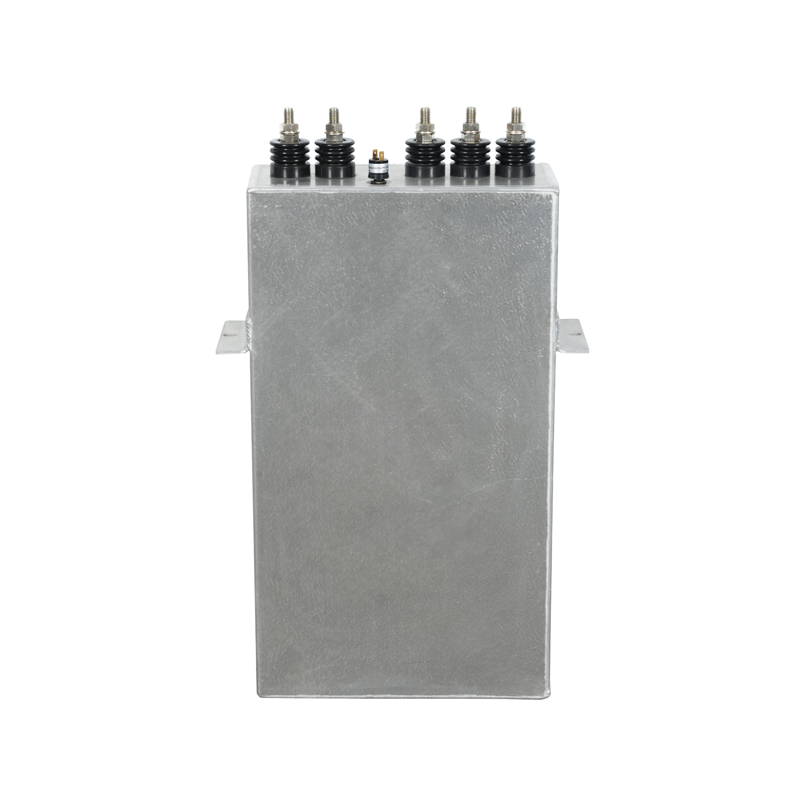
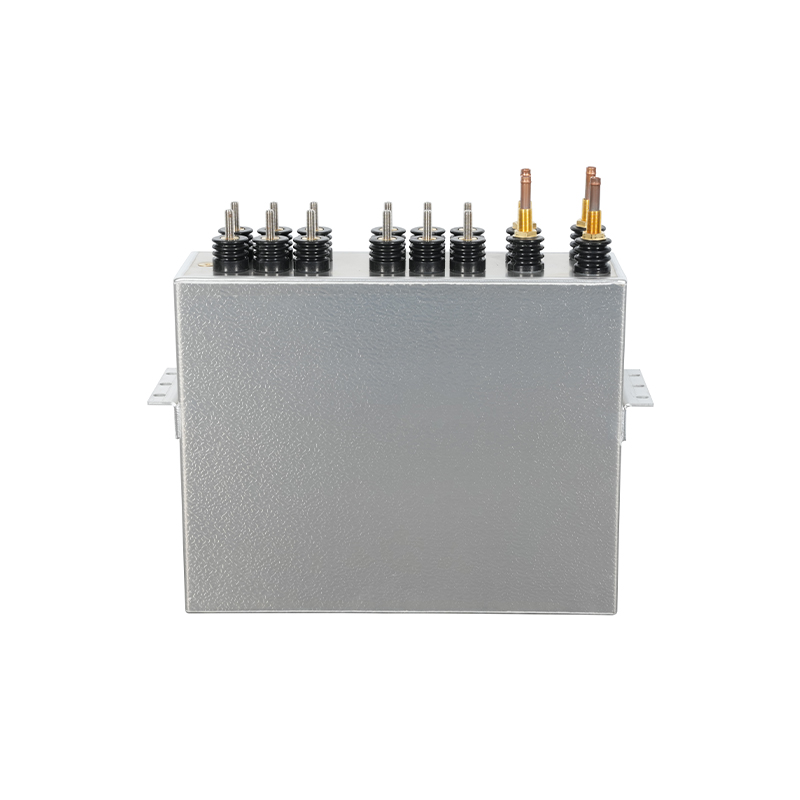
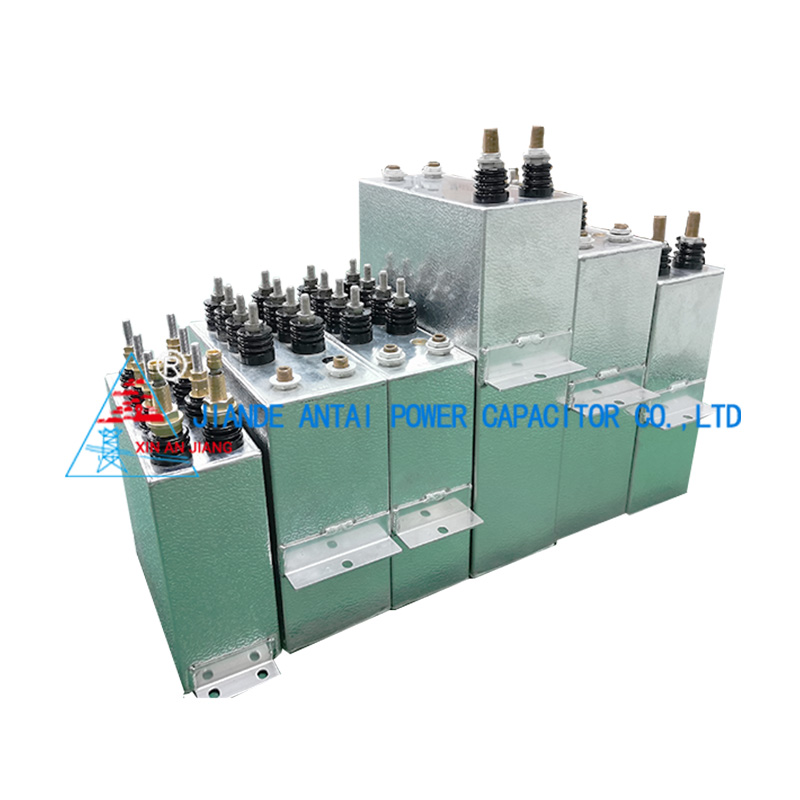
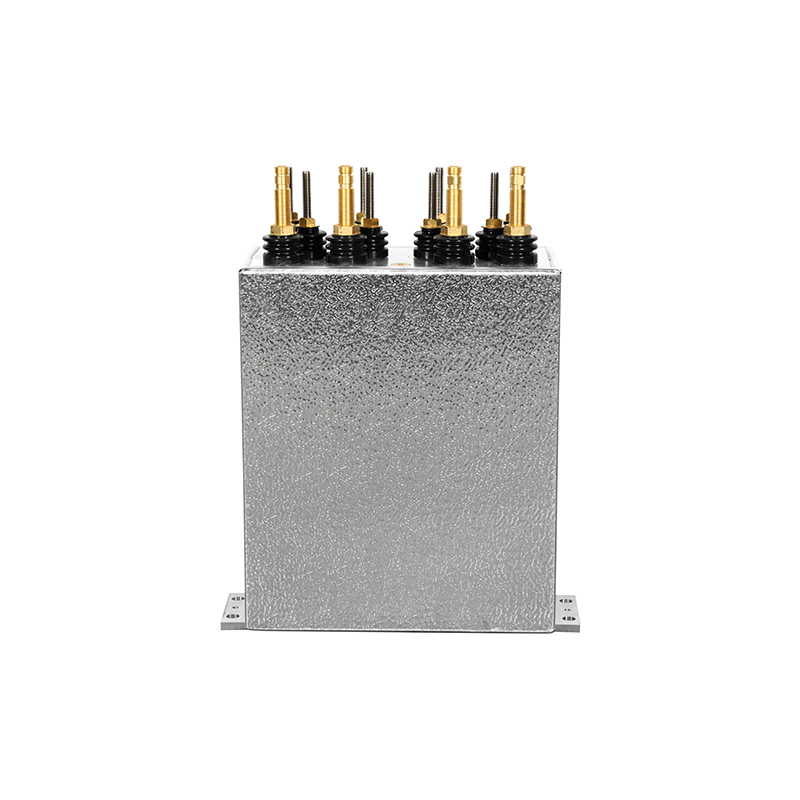
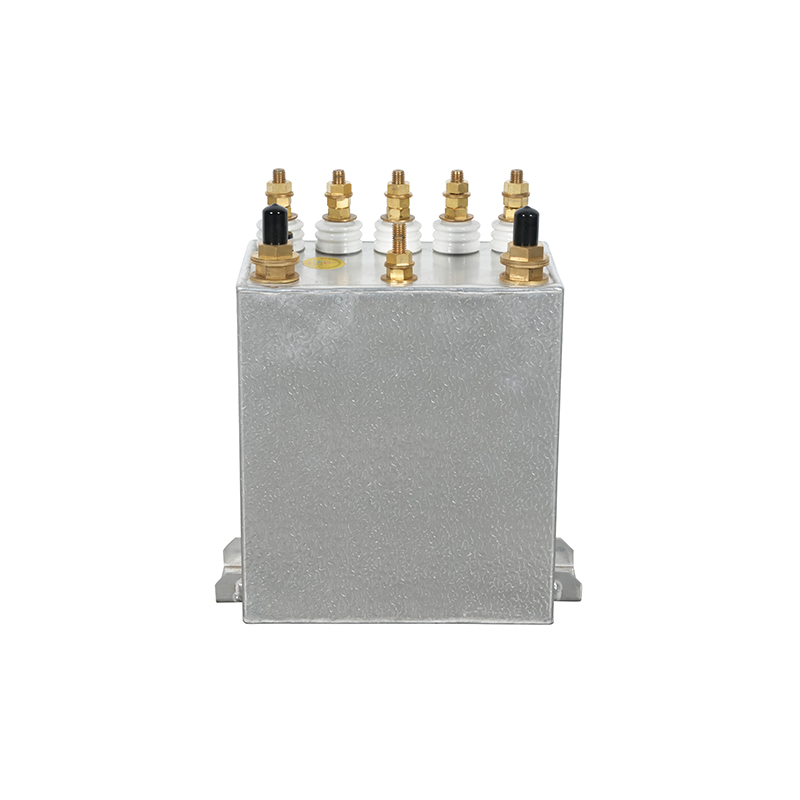
Direct Conclusion: Water cooled capacitors are compatible with induction heating systems (1-500 kHz, 50-2000 kVAR), induction melting furnaces (500 Hz - 10 kHz, 500-5000 kVAR), RF power supplies, and high-frequency welding equipment. Operating temperature range: inlet water 5-35°C, outlet 40-55°C maximum. Maximum case temperature rating: 85°C. Thermal dissipation capacity: 0.5-2.5 kW per kVAR depending on cooling flow rate (4-15 L/min).
Water cooled capacitors are engineered for high-power, high-frequency applications where air cooling is insufficient. By circulating deionized water through internal cooling tubes, these capacitors achieve current densities 3-5 times higher than air-cooled equivalents while maintaining dielectric temperature within safe limits. For complete technical specifications and sizing guides, refer to the water cooled capacitors product catalog.
Industrial Systems Compatible with Water Cooled Capacitors
Water cooled capacitors serve as essential reactive components in resonant circuits where reactive power exceeds 100 kVAR. Their low equivalent series resistance (ESR) and high ripple current capability make them indispensable for the following systems:
Induction Heating Power Supplies
Solid-state induction heaters operating at 1-500 kHz utilize water cooled capacitors in the output resonant tank circuit. Typical configurations: parallel resonant (for ferrous metals) or series resonant (for non-ferrous). Compatible power ranges: 10 kW to 2000 kW. Systems include surface hardening stations, annealing lines, and brazing machines. Capacitor bank sizes: 100-2000 kVAR at 300-2000 VAC.
Induction Melting Furnaces
Coreless induction melting furnaces (500 Hz - 10 kHz) demand water cooled capacitors for power factor correction and voltage matching. Furnace capacities: 50 kg to 30 tons. Capacitor banks operate at 400-3000 VAC, 500-5000 kVAR. Compatible with medium-frequency (MF) power supplies from ABB, Inductotherm, Ajax Tocco, and local manufacturers.
High-Frequency Welding Equipment
Tube and pipe welding lines (200-800 kHz) use water cooled capacitors in impedance matching networks. Specific applications: ERW pipe mills (20-200 kW), spiral fin welding, and seam annealers. Cooling requirements: 8-12 L/min at 20°C inlet maintains case temperature below 70°C at 100% duty cycle.
Equipment Type
Frequency Range
Typical kVAR Rating
Cooling Flow Required (L/min)
Induction heater (surface hardening)
10-200 kHz
50-500 kVAR
4-8 L/min per capacitor
Induction melting furnace
500 Hz - 10 kHz
500-5000 kVAR
10-15 L/min per unit
RF power generator
50 kHz - 2 MHz
10-200 kVAR
3-6 L/min
ERW tube welder
200-800 kHz
50-300 kVAR
8-12 L/min
Plasma power supply
1-50 kHz
100-1000 kVAR
6-10 L/min
Operating Temperature Limits and Thermal Management
Water cooled capacitors utilize dielectric materials (polypropylene or ceramic) with defined temperature limits. Exceeding these limits accelerates aging and reduces operational life exponentially - every 10°C above rating halves capacitor life.
Above 55°C indicates insufficient flow or excessive load
Maximum case (outer body) temperature
85°C (polypropylene), 100°C (ceramic)
Dielectric breakdown above 105°C
Hot spot (internal) temperature
95°C maximum (measured by thermal modeling)
Excessive ESR heating; film shrinkage above 100°C
Critical thermal rule: For every 5°C reduction in hot spot temperature, capacitor life doubles. Operating at 75°C hot spot yields 100,000 hours; at 95°C hot spot yields 10,000 hours. Always design cooling systems for maximum ambient conditions.
Thermal Management Capabilities by Cooling Flow Rate
Water cooled capacitors dissipate heat through internal copper or aluminum cooling tubes. The relationship between cooling water flow, temperature rise, and power dissipation follows the formula: P (kW) = Flow (L/min) x ΔT (°C) x 0.07. Practical data:
Flow 4 L/min, ΔT 10°C: Dissipates 2.8 kW per capacitor. Suitable for 100-200 kVAR units at 10 kHz.
Flow 8 L/min, ΔT 15°C: Dissipates 8.4 kW. Standard for 500-800 kVAR induction melting capacitors.
Flow 12 L/min, ΔT 12°C: Dissipates 10.1 kW. Heavy duty design for 1000-2000 kVAR systems.
Flow 15 L/min, ΔT 10°C: Dissipates 10.5 kW maximum practical limit before erosion concerns.
Maximum allowable power dissipation per kVAR varies with frequency. At 1 kHz, typical loss is 2-3 W/kVAR. At 100 kHz, loss increases to 25-40 W/kVAR. Therefore, a 500 kVAR capacitor operating at 100 kHz generates 12.5-20 kW of heat - requiring 10-15 L/min cooling flow.
Water Quality Requirements for Capacitor Cooling
Cooling water chemistry directly affects capacitor longevity. Deionized (DI) water is mandatory to prevent electrolytic corrosion of internal cooling tubes. Acceptable parameters:
Conductivity: < 10 µS/cm (ideal < 2 µS/cm)
pH range: 6.5 - 8.0 (7.0 ideal)
Chloride content: < 5 ppm
Particle size: < 100 µm (50 µm recommended)
Biological growth: Use biocidal treatment or UV sterilizer
Failure to maintain water quality results in tube blockage (reducing flow) or pitting corrosion (causing coolant leaks into dielectric). Annual water analysis and filter replacement (50 µm absolute) are standard maintenance practices.
High-Frequency Compatibility and ESR Considerations
Water cooled capacitors designed for induction heating use low-loss dielectric films (polypropylene with metalized or foil electrodes). Equivalent series resistance (ESR) determines self-heating. Typical ESR values:
1-10 kHz: ESR < 0.5 mΩ per kVAR
10-50 kHz: ESR 0.8-1.5 mΩ per kVAR
50-200 kHz: ESR 2.0-4.0 mΩ per kVAR
200-500 kHz: ESR 5.0-10 mΩ per kVAR (special low-inductance designs required)
Above 500 kHz, standard water cooled capacitors experience excessive dielectric losses. For RF applications (up to 2 MHz), vacuum capacitors with water cooling are preferred.
System Integration and Safety Parameters
When integrating water cooled capacitors into induction systems, observe these design limits:
Mandatory protection systems:
Flow switch (set to 60% of nominal flow) to disconnect power if cooling fails
Temperature sensor on outlet water (alarm at 50°C, shutdown at 55°C)
Pressure relief valve (set at 6-8 bar for typical 4 bar operating pressure)
Deionization loop or mixed-bed resin cartridge for conductivity control
For engineering support, thermal calculations, and retrofitting existing induction systems with modern water cooled capacitors, consult the application engineering team. Standard lead time for custom voltage and kVAR ratings is 4-6 weeks. Stock units (100-800 kVAR, 400-2000 VAC) ship within 5 working days.

 English
 русский
 Deutsch