Content
Modern electrical power systems face constant challenges. Inductive loads such as motors, transformers, and induction furnaces draw reactive power from the grid. This reactive power does not perform useful work but still flows through transmission lines, transformers, and switchgear, causing voltage drops, increased losses, and reduced system capacity.
The high voltage shunt capacitor is the most effective and economical solution for power factor correction. Connected directly to the high voltage bus, these capacitors supply reactive power locally, relieving the grid of this burden. The result is improved voltage regulation, reduced line losses, increased system capacity, and lower electricity costs.
This article provides a comprehensive technical comparison of high voltage shunt capacitors, focusing on metallized film versus traditional foil type constructions. We will examine dielectric materials, self healing properties, thermal management, seismic design, and application guidelines. For utility engineers and industrial procurement professionals, this guide serves as a reference for selecting the appropriate high voltage shunt capacitor for different system conditions and environmental requirements.
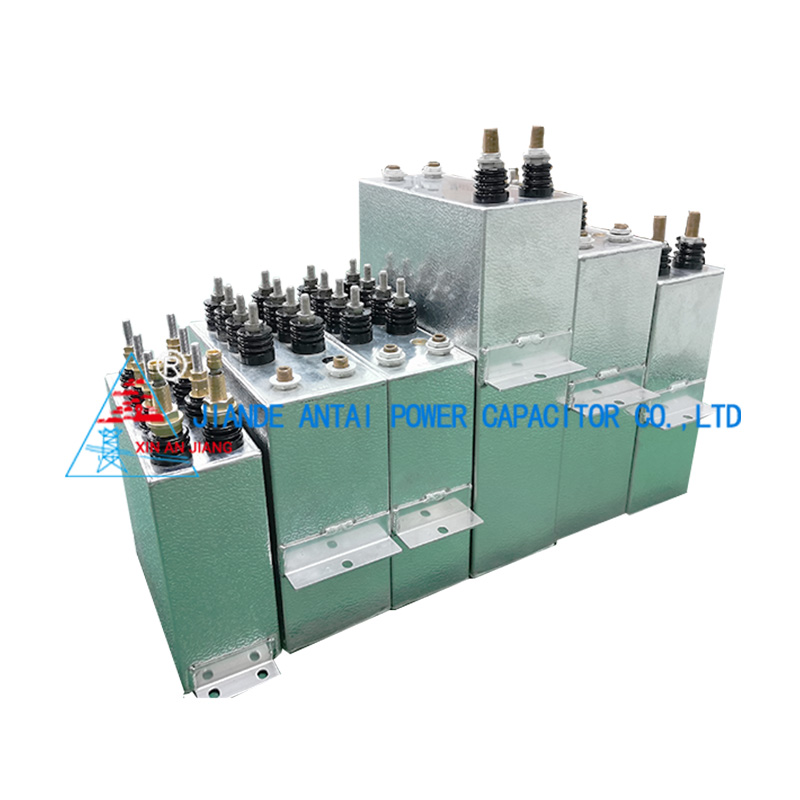
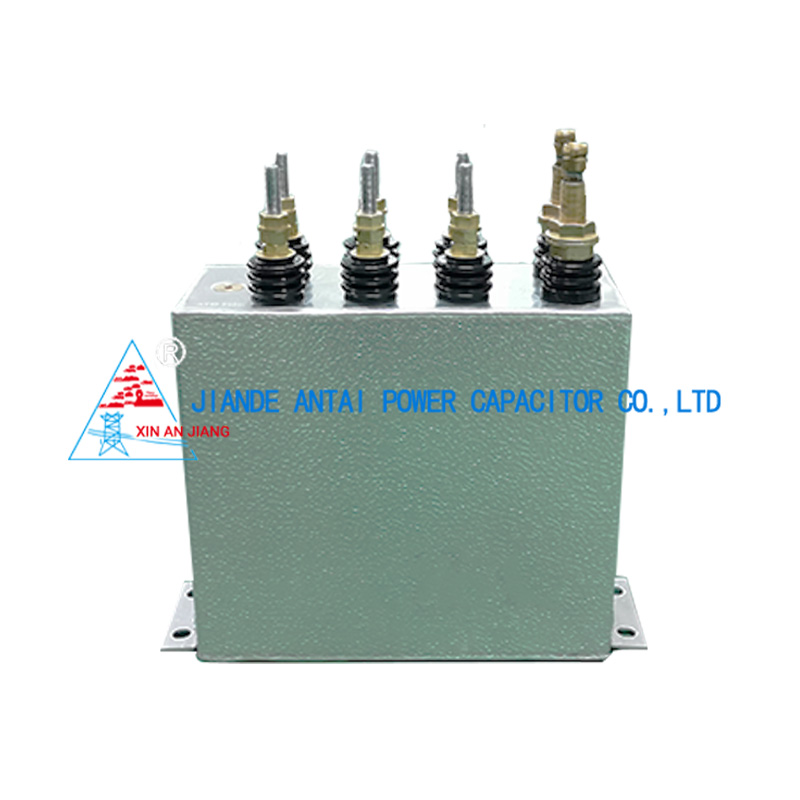
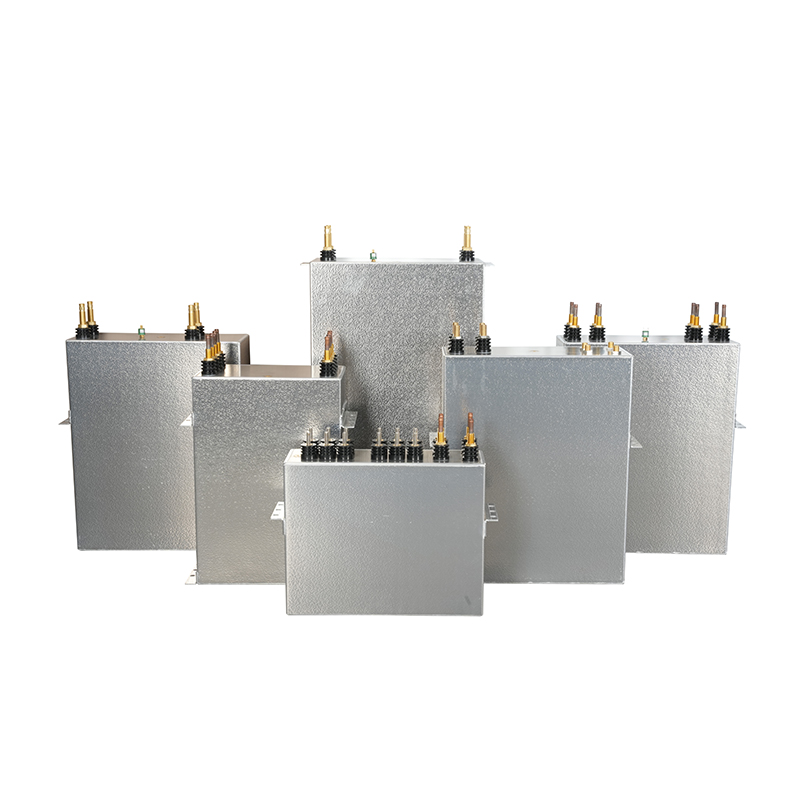
A high voltage shunt capacitor is an electrical component connected in parallel with an AC power system to supply reactive power and improve power factor. These capacitors are designed for continuous operation at voltages from 1 kilovolt to 24 kilovolts and above, with power ratings from 100 to 667 kilovolt amperes reactive per unit.
The construction of a modern high voltage shunt capacitor begins with the dielectric material. Quality capacitors use advanced metallized polypropylene film. Polypropylene offers excellent electrical insulation properties, very low dielectric loss, high breakdown field strength, and stable capacitance over temperature and time.
The metallization process applies an extremely thin layer of metal, typically aluminum or a zinc aluminum alloy, directly onto the film surface. This metallized layer serves as the capacitor electrode. Unlike traditional foil capacitors that use separate metal foil electrodes, the metallized film construction enables the self healing property that distinguishes modern high voltage shunt capacitors.
The capacitor winding consists of multiple layers of metallized film wound into a cylindrical or flattened shape. The winding is then subjected to vacuum drying to remove moisture and air. Impregnation with a non PCB insulating fluid fills any remaining voids, improving dielectric strength and heat transfer.
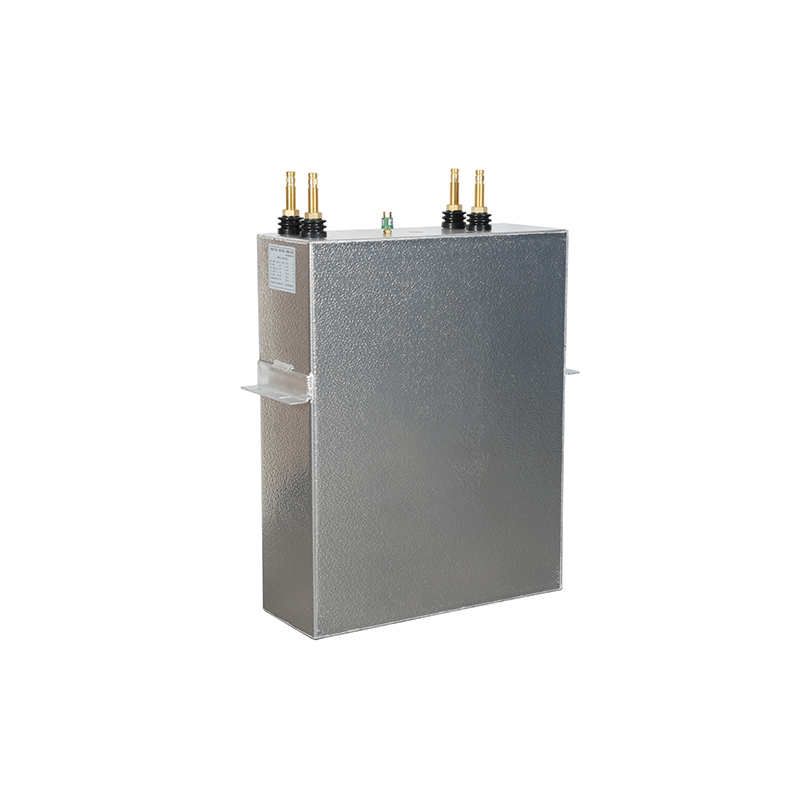
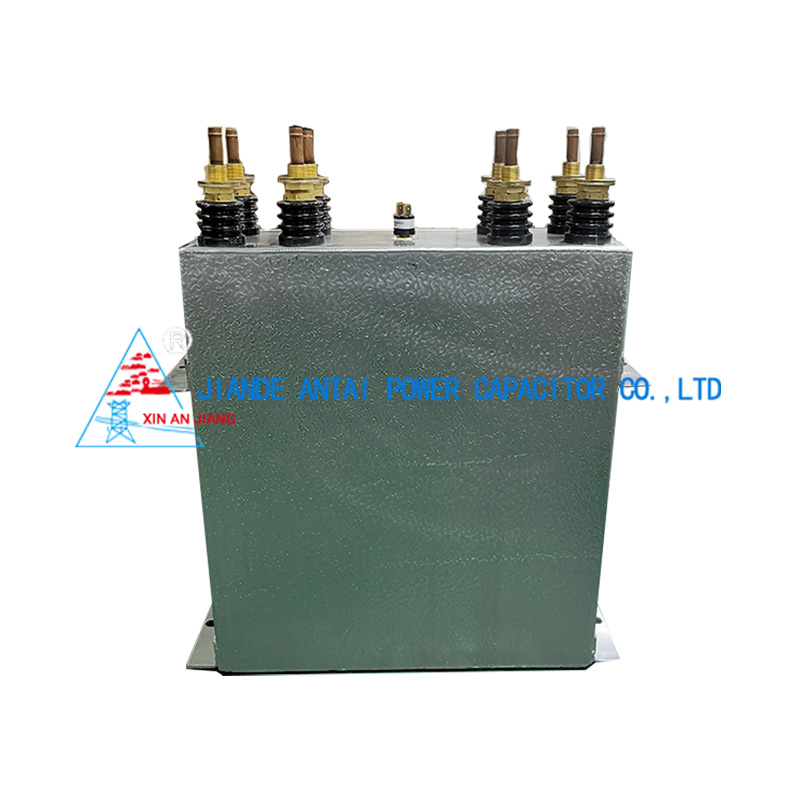
The finished winding is housed in a robust casing, typically made of stainless steel for corrosion resistance and mechanical strength. The casing provides environmental protection and acts as a heat dissipation surface. Terminals are designed for high voltage connection, and internal discharge resistors ensure safe residual voltage levels when the capacitor is disconnected.
The fundamental difference between metallized film and foil type high voltage shunt capacitors lies in the electrode structure. This difference drives self healing capability, failure mode, and long term reliability.
In a foil type capacitor, separate aluminum foil electrodes are interleaved with the dielectric film. The foil is thick, typically 5 to 10 micrometers, and provides very low resistance. However, when a dielectric breakdown occurs in a foil capacitor, the fault creates a permanent short circuit. The capacitor fails catastrophically, often causing system disturbances, fuse blowing, and even tank rupture.
In a metallized film capacitor, the electrode is a microscopically thin metal layer applied directly to the film surface. When a dielectric breakdown occurs, the high fault current vaporizes the metallization around the fault point. The vaporized metal blows away from the area, leaving a small insulating gap. The capacitor self heals and continues to operate with only negligible loss of capacitance.
The table below compares metallized film and foil type high voltage shunt capacitors across key parameters.
| Parameter | Metallized Film Capacitor | Foil Type Capacitor |
|---|---|---|
| Self Healing Capability | Yes recovers from breakdown | No fault creates permanent short |
| Failure Mode | Graceful gradual capacitance loss | Catastrophic short circuit |
| Dielectric Loss tan δ | Very low below 0.0005 | Low |
| Energy Density | Higher | Lower |
| Physical Size for Same Rating | Smaller | Larger |
| Reliability Under Voltage Spikes | High self healing absorbs spikes | Moderate spike may cause permanent damage |
| End of Life Indication | Capacitance drift | Short circuit or fuse operation |
| Best Application | Power factor correction, long service life | Specialized pulse applications |
For high voltage shunt capacitor applications in power systems, where voltage spikes from switching transients and lightning are common, the self healing property of metallized film is decisive. The capacitor can survive thousands of small breakdown events over its lifetime, each self healing without interrupting system operation.
The self healing property of metallized film high voltage shunt capacitors is their most valuable characteristic. Understanding this mechanism explains why these capacitors have replaced foil types in nearly all utility and industrial power factor correction applications.
A dielectric breakdown occurs when the voltage stress across the polypropylene film exceeds its dielectric strength. This can happen due to a manufacturing defect, a voltage spike from switching operations, a lightning surge, or gradual aging of the film. At the breakdown point, a small conductive channel forms through the film. Current flows through this channel, creating intense localized heating.
Because the metallized electrode is only a few tens of nanometers thick, the heat from the breakdown current rapidly vaporizes the metal around the fault point. The vaporized metal expands, blowing away from the area. Within microseconds, the conductive path is interrupted. The surrounding metallization remains intact, and the capacitor continues to function with a small area of film no longer contributing to capacitance.
The energy required for self healing is very small. Each healing event consumes only a tiny area of metallization, typically less than one square millimeter. The capacitance loss per event is negligible, often less than one part per million. A well designed high voltage shunt capacitor can withstand thousands or even tens of thousands of self healing events over its lifetime.
The insulating fluid plays a critical role in self healing. The fluid cools the fault point rapidly, preventing the breakdown from spreading to adjacent film layers. The fluid also provides an oxygen free environment, preventing combustion. Quality high voltage shunt capacitors use non PCB insulating fluids that are environmentally safe and have excellent dielectric properties.
For the power system operator, self healing means that a high voltage shunt capacitor does not require immediate removal from service after a transient overvoltage. The capacitor may continue to operate for many years, with only a gradual decrease in capacitance. Periodic capacitance monitoring can predict end of life, allowing planned replacement rather than emergency outage.
High voltage shunt capacitor banks are typically assembled from multiple individual capacitor units connected in parallel and series combinations. Protection against internal faults is essential.
Internal fuses are mounted inside the capacitor unit, connected in series with each element or section. When a section fails, its internal fuse operates, isolating the failed section while allowing the remaining sections to continue operating. The capacitor unit loses a small amount of capacitance but remains in service. Internal fuses provide unit level protection without requiring external devices.
External fuses are mounted outside the capacitor unit, typically on the terminal bushing. When a capacitor unit fails completely, the external fuse operates, isolating the entire unit. External fuses are simpler and less expensive than internal fuses, but they take the entire unit out of service for any internal fault.
| Feature | Internal Fuse | External Fuse |
|---|---|---|
| Fault Isolation Level | Individual element or section | Entire capacitor unit |
| Capacitance Loss After Fault | Small fraction of unit rating | Full unit rating |
| Unit Remains in Service | Yes after fuse operation | No unit is disconnected |
| Fuse Replacement | Not possible unit is replaced | Yes external fuse can be replaced |
| Unit Cost | Higher | Lower |
| Bank Protection Complexity | Lower | Higher requires more coordination |
| Best Application | Large banks, critical systems | Smaller banks, non critical systems |
For large high voltage shunt capacitor banks in utility substations, internal fuses are generally preferred. The loss of a single element causes only a small capacitance change, and the bank continues to provide power factor correction without interruption. The failed unit can be replaced during scheduled maintenance.
High voltage shunt capacitors generate heat from dielectric losses and resistive losses in the electrodes and connections. Effective heat dissipation is essential for long service life. Poor thermal design leads to elevated operating temperatures, which accelerate aging and reduce reliability.
The primary heat dissipation path is from the winding through the insulating fluid to the casing, then from the casing to the surrounding air. The rate of heat transfer depends on the thermal conductivity of the materials, the surface area of the casing, and the airflow around the capacitor.
Quality high voltage shunt capacitors use metallized polypropylene film with very low dielectric loss. The loss tangent, or tan delta, should be below 0.0005 at rated voltage and 20°C. This low loss means less heat is generated internally for the same reactive power output. By comparison, older paper dielectric capacitors had loss tangents ten to twenty times higher.
The casing material affects heat dissipation. Stainless steel casings provide good mechanical strength and corrosion resistance but have lower thermal conductivity than aluminum. However, the thin wall thickness of modern casings minimizes this difference. Some manufacturers offer aluminum casings for applications where weight is a concern.
Forced air cooling may be required in high ambient temperature environments or for densely packed capacitor banks. Fans increase airflow across the capacitor surfaces, enhancing heat transfer. For very high power density applications, water cooling can be used, though this is more common in specialty capacitors than in standard high voltage shunt units.
When you select a High Voltage Shunt Capacitor, consider the installation environment. Capacitors should not be installed in direct sunlight, near high temperature heat sources, or in poorly ventilated enclosures. Adequate spacing between units allows air to circulate freely.
The table below summarizes heat dissipation considerations.
| Factor | Recommendation | Reason |
|---|---|---|
| Dielectric Loss tan δ | Below 0.0005 | Minimizes internal heat generation |
| Casing Material | Stainless steel or aluminum | Provides good heat transfer |
| Spacing Between Units | Minimum 50 to 100 mm | Allows airflow for cooling |
| Sun Exposure | Avoid direct sunlight | Reduces external heating |
| Ambient Temperature | Within -25°C to +50°C | Maintains rated performance |
| Forced Cooling | Required above 40°C ambient | Prevents overheating |
In regions with seismic activity, high voltage shunt capacitors must withstand earthquake forces without structural damage or electrical failure. Seismic design is a critical consideration for utilities in areas such as Japan, California, Turkey, and China.
The seismic design of a high voltage shunt capacitor begins with mechanical strength. The capacitor casing must resist bending, twisting, and compression forces without deformation. Stainless steel casings provide excellent mechanical strength. The internal winding must be securely anchored to prevent movement relative to the casing. Loose windings can damage electrical connections or short circuit to the casing during vibration.
Shock absorbing devices are often used to mount capacitor units. Rubber or neoprene pads placed between the capacitor base and the support structure absorb vibration energy and reduce the forces transmitted to the capacitor. For larger installations, spring type vibration isolators provide even greater protection.
Seismic calculation and simulation using computer aided engineering software can predict capacitor response to earthquake forces. The designer creates a three dimensional model of the capacitor and applies seismic waves of different intensities and frequencies. The analysis identifies stress concentrations, potential weak points, and maximum displacements. Design iterations improve the seismic performance before physical prototypes are built.
The installation environment affects seismic performance. Capacitors installed indoors benefit from the building structure absorbing some seismic energy. Outdoor installations, particularly on elevated platforms or steel structures, may experience greater forces. The mounting structure itself must be designed for seismic loads.
Electrical connections must accommodate relative motion during an earthquake. Rigid bus bars can break or pull apart. Flexible connections, such as braided copper jumpers or expansion connectors, allow movement without loss of electrical contact. Terminal connections should be secured with locking hardware to prevent loosening from vibration.
For customers in seismic zones, manufacturers can provide personalized seismic design solutions. These may include reinforced casings, heavy duty mounting brackets, additional internal bracing, and specialized vibration isolators. The goal is to ensure the capacitor remains operational after a seismic event, maintaining power factor correction for critical loads.
High voltage shunt capacitors are designed for operation within specific environmental limits. Operating outside these limits may affect performance, reliability, and service life.
The ambient temperature range is typically minus 25°C to plus 50°C. Within this range, the capacitor maintains its electrical specifications. At low temperatures, the insulating fluid becomes more viscous, which may affect self healing speed. At high temperatures, the dielectric loss increases and the capacitor life decreases. For every 8 to 10°C increase in operating temperature above the rated maximum, capacitor life is halved.
Relative humidity should not exceed 85 percent. In high humidity environments, moisture can condense on terminal bushings, reducing surface insulation and potentially causing flashover. Dehumidification measures, such as enclosure heating or air conditioning, are recommended for high humidity installations.
Altitude affects dielectric strength. At altitudes above 2000 meters, the air pressure is lower, reducing the dielectric strength of air. This affects external insulation, such as the air gap between terminals and between terminals and ground. For high altitude installations, capacitors may require design modifications such as increased creepage distance or special terminal treatments.
The ambient medium should be free of corrosive gases, conductive dust, and explosive dust. Corrosive gases such as sulfur dioxide or hydrogen sulfide can attack terminal plating and casing finishes. Conductive dust can accumulate on bushings, creating leakage paths. For contaminated environments, capacitors with epoxy resin coating or other protective layers are recommended.
The table below summarizes environmental specifications.
| Environmental Factor | Allowable Range | Effect of Exceeding Limit |
|---|---|---|
| Ambient Temperature | -25°C to +50°C | Reduced life at high temperature |
| Relative Humidity | Up to 85% | Flashover risk at high humidity |
| Altitude | Up to 2000 m | Reduced external insulation |
| Corrosive Gases | None | Terminal corrosion |
| Conductive Dust | None | Surface leakage paths |
High voltage shunt capacitors are available in a range of voltage and power ratings to suit different system voltages and reactive power requirements.
Standard voltage ratings for high voltage shunt capacitors are derived from the nominal system voltages. Common ratings include 1.05, 3.15, 6.6 divided by square root of 3, 6.3, 10.5 divided by square root of 3, 10.5, 11 divided by square root of 3, 11, 12 divided by square root of 3, 12, 24 divided by square root of 3, and 24 kilovolts. The square root of 3 divisors apply to star connected capacitor banks where the capacitor voltage is the phase to neutral voltage.
Standard power ratings include 100, 150, 200, 300, 334, 400, 417, 500, and 667 kilovolt amperes reactive. These ratings represent the reactive power output at rated voltage and frequency. Multiple units are connected in parallel and series to achieve the total bank rating.
For a given voltage rating, the power rating determines the capacitance value. Higher power ratings require larger capacitance, which generally means physically larger units or multiple units connected in parallel. The power rating should be selected to provide the required amount of power factor correction without overcorrection, which can cause overvoltage and system instability.
When selecting voltage rating, consider the system operating voltage range. The capacitor must withstand continuous operation at up to 110 percent of rated voltage. Intermittent overvoltages up to 130 percent of rated voltage are permissible for short durations. The capacitor should be applied at a voltage no lower than 95 percent of its rating to avoid excessive inrush currents.
Quality high voltage shunt capacitors undergo rigorous testing before leaving the factory. These tests verify electrical performance, mechanical integrity, and safety.
The capacitance test measures the actual capacitance value. The measured value must be within plus or minus 5 percent of the rated value. For three phase capacitors, the capacitance balance, defined as the ratio of the maximum capacitance to the minimum capacitance among phases, must not exceed 1.02. This balance ensures consistent reactive power output across all three phases.
The power factor test measures the loss tangent or tan delta. At rated voltage and 20°C, the loss tangent should not exceed 0.0005. A higher loss tangent indicates higher internal losses, which lead to increased heating and reduced life. Low loss tangent is a key indicator of quality.
The voltage withstand test applies AC voltage at 2.15 times the rated voltage for 10 seconds between terminals. This test verifies the dielectric strength of the internal insulation. The capacitor must withstand this test without breakdown or flashover.
The terminal to case voltage withstand test applies AC voltage at 2.5 times the rated voltage, with a minimum of 2 kilovolts, for 1 minute. This test verifies the insulation between the active elements and the grounded casing.
Sealing tests confirm that the capacitor casing is properly sealed. No leakage of insulating fluid should be detected. For dry type or epoxy resin encapsulated capacitors, the sealing test verifies that moisture cannot enter.
For manufacturers with ISO9001 and CE certifications, these tests are performed systematically on each production unit or on a statistical sample depending on the standard. Independent testing laboratories may also perform sample testing to verify compliance with standards such as GB/T 3984 and IEC 60871.
Proper installation and regular maintenance extend the life of high voltage shunt capacitors and ensure safe operation.
During installation, ensure adequate clearance between capacitor units and between capacitors and nearby structures. The recommended minimum spacing is 50 to 100 millimeters to allow airflow for cooling. Maintain proper creepage distances for the voltage level as specified in applicable standards.
Mounting surfaces must be level and rigid. Capacitors should be secured to prevent movement from vibration or seismic events. Use rubber pads or vibration isolators when mounting on steel structures to reduce transmitted vibration.
Electrical connections must be clean, tight, and corrosion protected. High resistance connections cause localized heating and can lead to terminal failure. Use antioxidant compound on aluminum terminals. Torque all connections to the manufacturer specification.
During operation, monitor capacitor bank performance. Measure and record the voltage, current, and reactive power output periodically. Large changes in current or reactive power may indicate failed units. Compare these measurements to the calculated values based on the bank configuration.
Perform regular inspections. Look for signs of casing swelling, which indicates internal pressure from gas generation. Gas can be produced by self healing events or by degradation of the insulating fluid. Swollen casings should be replaced. Check terminals for signs of overheating, such as discoloration or melting of insulation.
Periodically measure capacitance of individual units. A capacitance loss of more than 5 percent from the nameplate value indicates significant self healing activity and the unit should be considered for replacement. A capacitance loss of more than 10 percent indicates end of life.
For grounded bank configurations, measure the insulation resistance between the capacitor terminals and ground using a megohmmeter. Low insulation resistance indicates moisture ingress or degradation of the internal insulation.
The selection of a high voltage shunt capacitor for power factor correction should be based on system requirements, environmental conditions, and reliability needs.
For utility substations and large industrial facilities, metallized film capacitors with internal fuses offer the best combination of reliability, self healing, and graceful degradation. The self healing property ensures that transient overvoltages do not cause catastrophic failure. Internal fuses isolate failed elements while keeping the unit in service.
For smaller installations or less critical applications, metallized film capacitors with external fuses or without fuses may be acceptable. The lower initial cost is balanced against the potential for unit failure taking the entire bank out of service.
Consider the environmental conditions at the installation site. For high ambient temperatures, ensure adequate spacing and ventilation. For high humidity, consider capacitors with epoxy resin coating or enclosed mounting. For seismic zones, request capacitors with reinforced construction and vibration isolation mounting.
Select voltage and power ratings that match the system requirements. Do not over specify voltage rating unnecessarily, as this reduces the reactive power output for a given capacitance. Do not under specify, as overvoltage operation reduces capacitor life.
By understanding the technical comparisons and design considerations presented in this article, utility engineers and procurement professionals can confidently select high voltage shunt capacitors that will provide reliable, efficient power factor correction for many years.
Q1: What is the typical life expectancy of a high voltage shunt capacitor?
A: A quality high voltage shunt capacitor with metallized film dielectric has a typical service life of 15 to 20 years under normal operating conditions. This assumes operation within the rated voltage and ambient temperature range, with adequate ventilation and proper maintenance. The self healing property allows the capacitor to survive voltage spikes that would destroy foil type capacitors. End of life is indicated by gradual capacitance loss; a loss exceeding 10 percent suggests the capacitor should be replaced.
Q2: How often should high voltage shunt capacitors be tested in service?
A: Annual capacitance and power factor testing is recommended for critical installations. For less critical installations, testing every two to three years may be sufficient. The tests should include capacitance measurement of individual units, loss tangent measurement, insulation resistance measurement, and visual inspection for casing swelling or terminal damage. Trend analysis is more valuable than single measurements; a gradual decline in capacitance or increase in loss tangent indicates normal aging, while a sudden change indicates a problem.
Q3: Can high voltage shunt capacitors be connected in series to increase voltage rating?
A: Yes, high voltage shunt capacitors can be connected in series to achieve a higher voltage rating. When capacitors are connected in series, the voltage divides inversely with capacitance. To ensure even voltage distribution, voltage balancing resistors should be connected across each capacitor unit. The resistors also serve as discharge paths when the capacitor bank is de energized. Series connection reduces the total capacitance, so the bank reactive power output decreases for the same applied voltage.
Q4: What is the difference between a shunt capacitor and a series capacitor?
A: A shunt capacitor is connected in parallel with the load or system bus. It supplies reactive power locally, improving power factor and voltage regulation. A series capacitor is connected in series with the transmission line. It cancels part of the line inductive reactance, increasing power transfer capability and improving voltage stability. Shunt capacitors are far more common for power factor correction at industrial and distribution level facilities. Series capacitors are typically used on long transmission lines.
Q5: Why do high voltage shunt capacitors have discharge resistors?
A: Discharge resistors are connected internally across the capacitor terminals to discharge the stored electrical charge after the capacitor is disconnected from the power source. Without discharge resistors, a high voltage shunt capacitor could retain a dangerous charge for hours or days. The resistors reduce the terminal voltage to below 50 volts within a specified time, typically 5 minutes for high voltage capacitors. This provides safety for personnel working on the disconnected capacitor bank.
Contact Us
News center
Jun - 2026 - 22
information
Tel: +86-571-64742598
Fax: +86-571-64742376
Add: Zhangjia Industrial Park, Genglou Street, Jiande City, Zhejiang Province, China