Content
In the world of power electronics, the quality of direct current determines the performance of everything from industrial drives and traction systems to renewable energy inverters and electrolysis plants. Raw DC output from rectifiers contains residual alternating current ripple, voltage spikes, and transient disturbances. Without filtering, this contaminated DC can cause equipment malfunction, overheating, and premature failure.
The DC filter capacitor is the silent guardian that stands between the raw rectified voltage and the sensitive load. It smooths ripple, absorbs voltage spikes, and stores energy for transient loads. Among the various capacitor technologies available for DC filtering, metallized film capacitors have emerged as the dominant choice for high performance, high reliability applications.
This article provides a comprehensive technical comparison of DC filter capacitors, focusing on metallized film versus traditional foil type constructions. We will examine dielectric materials, self healing properties, thermal management, mounting configurations, and protection features. For engineers and procurement professionals, this guide serves as a reference for selecting the appropriate DC filter capacitor for different voltage levels, current requirements, and environmental conditions.
A DC filter capacitor is an electrical component connected across a DC power supply output to smooth voltage fluctuations and remove unwanted AC components. The capacitor acts as a reservoir, charging when the voltage rises and discharging when the voltage falls, thereby maintaining a more constant output voltage.
The construction of a modern DC filter capacitor begins with the dielectric material. High quality capacitors use metallized polypropylene film as the dielectric. Polypropylene offers low dielectric loss, high insulation resistance, and stable capacitance over temperature. The film is extremely thin, typically 3 to 12 micrometers, allowing high capacitance values in a compact volume.
The metallization process applies a microscopic layer of metal, usually aluminum or zinc aluminum alloy, to the film surface. This metallized layer serves as the capacitor electrode. The combination of film and metallization creates a self healing structure that distinguishes metallized film capacitors from traditional foil types.
The capacitor winding consists of multiple layers of metallized film wound into a cylindrical or flattened shape. The winding is then subjected to vacuum drying and impregnation processes. Vacuum drying removes moisture and air from between the film layers. Impregnation with insulating oil, such as environmentally friendly rapeseed oil, fills any remaining voids, improving dielectric strength and heat transfer.
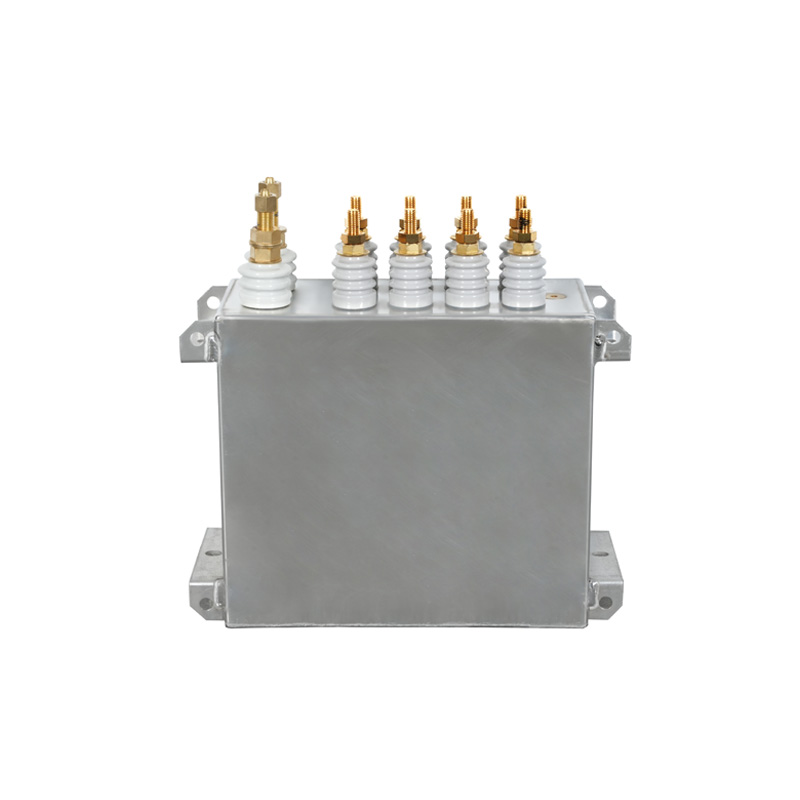
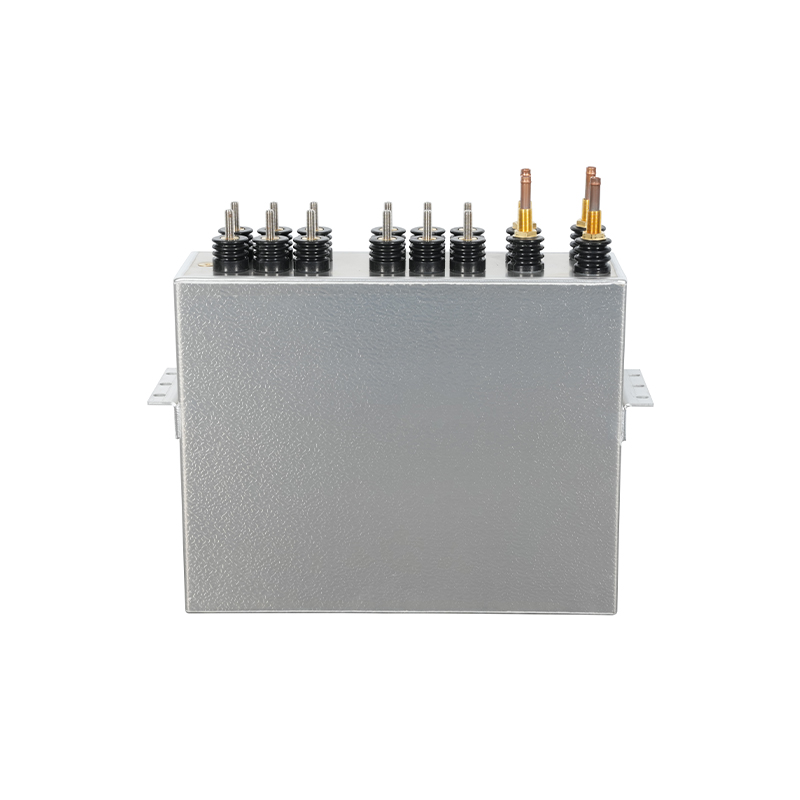
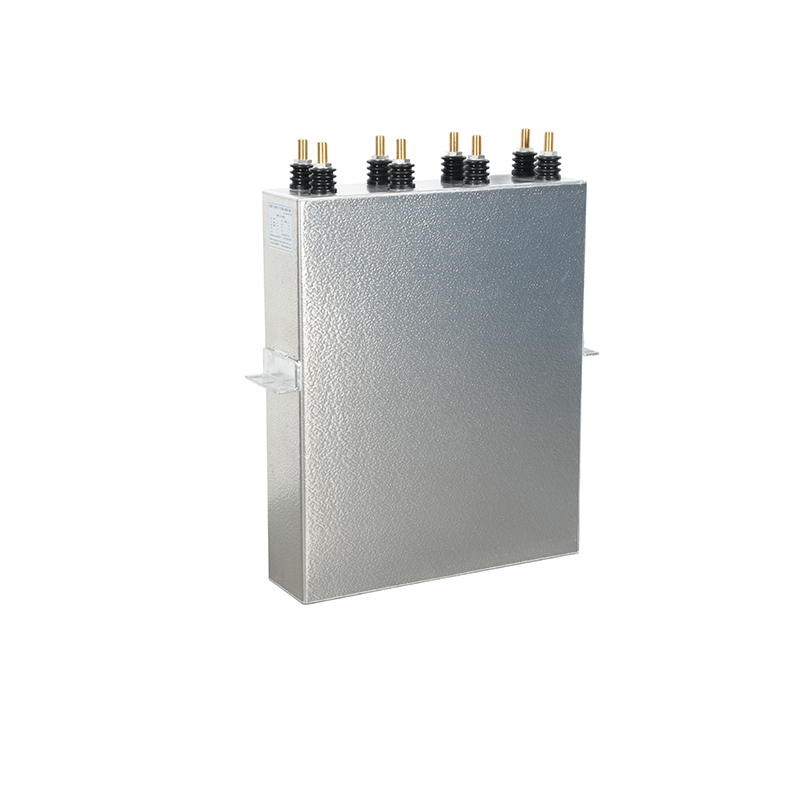
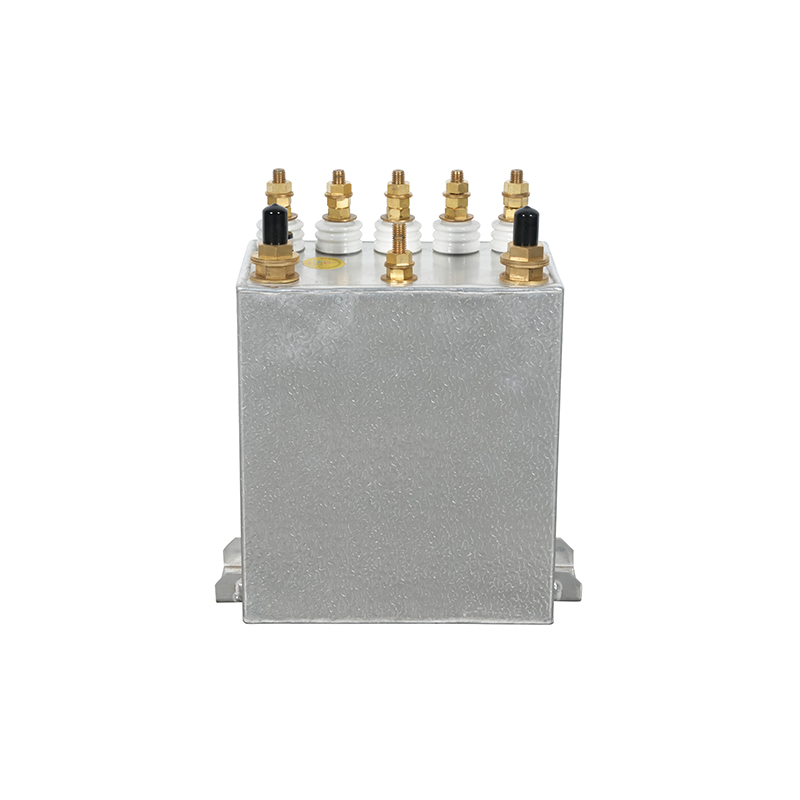
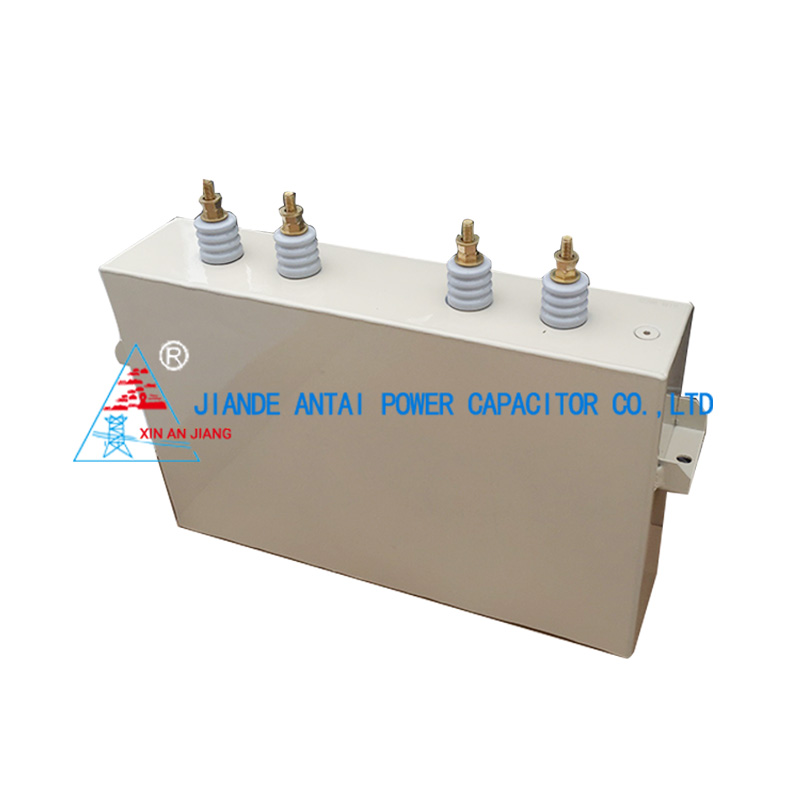
The finished winding is housed in a casing, typically aluminum or stainless steel. The casing is available in live case or isolated dead case configurations. Terminals are usually copper. A pressure switch provides overpressure protection in the event of internal fault.
For DC filtering applications, these capacitors are available with voltages up to 1800 volts DC and capacitance values up to 10,000 microfarads. Both water cooled and air cooled versions are available, with water cooling required for the highest power densities.
The fundamental difference between metallized film and foil type capacitors lies in the electrode structure. This difference drives self healing capability, current handling, and failure mode.
In a foil type capacitor, separate aluminum foil electrodes are interleaved with the dielectric film. The foil is thick, typically 5 to 10 micrometers, and provides very low resistance. This construction can handle very high peak currents. However, when a dielectric breakdown occurs in a foil capacitor, the fault creates a permanent short circuit. The capacitor fails catastrophically, often taking the surrounding equipment with it.
In a metallized film capacitor, the electrode is a microscopically thin metal layer applied directly to the film surface. When a dielectric breakdown occurs, the high fault current vaporizes the metallization around the fault point. The vaporized metal blows away from the area, leaving a small insulating gap. The capacitor self heals and continues to operate with only a negligible loss of capacitance.
The table below compares metallized film and foil type DC filter capacitors across key parameters.
| Parameter | Metallized Film Capacitor | Foil Type Capacitor |
|---|---|---|
| Self Healing Capability | Yes recovers from breakdown | No fault creates permanent short |
| Failure Mode | Graceful gradual capacitance loss | Catastrophic short circuit |
| Peak Current Handling | Moderate | Very High |
| Equivalent Series Resistance | Low to moderate | Very Low |
| Physical Size for Same Capacitance | Smaller | Larger |
| Cost | Moderate | Higher due to more material |
| Reliability Under Voltage Spikes | High self healing absorbs spikes | Moderate spike may cause permanent damage |
| Best Application | DC filtering, voltage smoothing | Pulse discharge, high current applications |
For DC filter applications where voltage spikes and transients are common, the self healing property of metallized film capacitors is a decisive advantage. The capacitor can survive thousands of small breakdown events over its lifetime, each self healing without interrupting system operation.
The self healing property of metallized film DC filter capacitors is one of their most valuable characteristics. Understanding this mechanism explains why these capacitors dominate high reliability applications.
A dielectric breakdown occurs when the voltage stress across the film exceeds its dielectric strength. This can happen due to a manufacturing defect, a voltage spike, or gradual aging of the film. At the breakdown point, a small conductive channel forms through the film. Current flows through this channel, creating intense localized heating.
Because the metallized electrode is only a few tens of nanometers thick, the heat from the breakdown current rapidly vaporizes the metal around the fault point. The vaporized metal expands, blowing away from the area. Within microseconds, the conductive path is interrupted. The surrounding metallization remains intact, and the capacitor continues to function.
The energy required for self healing is very small. Each healing event consumes only a tiny area of metallization, typically less than one square millimeter. The capacitance loss per event is negligible, on the order of parts per million. A well designed capacitor can withstand thousands or even tens of thousands of self healing events over its lifetime.
The impregnation oil plays a critical role in self healing. The oil cools the fault point rapidly, preventing the breakdown from spreading to adjacent film layers. The oil also provides an oxygen free environment, preventing combustion. Quality DC filter capacitors use environmentally friendly insulating oils such as rapeseed oil, which is non toxic and biodegradable.
For the system designer, self healing means that a DC filter capacitor does not require immediate replacement after a voltage spike. The capacitor may continue to operate for years, with only a gradual decrease in capacitance. Periodic capacitance monitoring can predict end of life, allowing planned replacement rather than emergency shutdown.
The impregnation process is one of the most critical steps in manufacturing a high quality DC filter capacitor. Proper impregnation directly affects electrical performance, thermal management, and service life.
Before impregnation, the capacitor winding must be thoroughly dried. The vacuum drying process places the winding in a vacuum chamber and applies heat. Moisture trapped between the film layers evaporates and is removed by the vacuum pump. The vacuum level must reach a few Pascals or lower, and drying may take from several hours for small capacitors to dozens of hours for large units.
Once drying is complete, the impregnation oil is introduced while the winding remains under vacuum. The oil penetrates every void within the winding, displacing any remaining gas. The vacuum is then released, and pressure may be applied to ensure complete saturation.
The impregnation oil serves multiple functions. It fills voids that would otherwise contain air, which has lower dielectric strength and can ionize under voltage stress. It improves thermal conductivity, carrying heat from the interior of the winding to the casing. It provides electrical insulation between layers. And it supports the self healing process by cooling fault points and excluding oxygen.
Quality DC filter capacitors use high purity insulating oil that has been filtered and dehydrated before use. Rapeseed oil is a common choice for environmentally conscious designs because it is non toxic and biodegradable. Additives such as antioxidants may be included to extend oil life.
Poor impregnation leads to voids within the winding. These voids are sites of partial discharge, where the air ionizes under voltage stress. Partial discharge gradually erodes the dielectric film, leading to premature failure. Vacuum drying and impregnation are not optional steps; they are essential for reliable operation.
DC filter capacitors are available in a range of voltage and capacitance ratings to suit different applications. Understanding these ratings is essential for proper selection.
The voltage rating indicates the maximum continuous DC voltage that can be applied. Standard ratings for DC filter capacitors extend up to 1800 volts DC. For higher voltage systems, capacitors can be connected in series, though voltage balancing resistors are required.
The capacitance value determines the amount of ripple smoothing provided. For a given load current and frequency, larger capacitance produces lower ripple voltage. DC filter capacitors for industrial applications are available with capacitance up to 10,000 microfarads in a single unit. For higher capacitance requirements, multiple capacitors can be connected in parallel.
The table below provides typical voltage and capacitance combinations for common DC filter applications.
| Application | Typical Voltage DC | Typical Capacitance | Cooling Method |
|---|---|---|---|
| Low voltage power supplies | 100 to 400 V | 1000 to 5000 µF | Air cooled |
| Industrial drives | 400 to 800 V | 500 to 2000 µF | Air or water cooled |
| Traction and rail | 800 to 1200 V | 2000 to 5000 µF | Water cooled |
| Renewable energy inverters | 600 to 1500 V | 1000 to 4000 µF | Air or water cooled |
| High voltage power supplies | 1500 to 1800 V | 500 to 1500 µF | Water cooled |
Capacitance tolerance is typically minus 5 to plus 10 percent of rated value. The loss tangent or tan delta, measured at 20°C, should be below 0.0012 for quality DC filter capacitors. A higher loss tangent indicates higher internal heating and reduced efficiency.
When you select a DC Filter Capacitor, ensure that the voltage rating exceeds the maximum expected operating voltage by a suitable margin, typically 10 to 20 percent.
DC filter capacitors generate heat from dielectric losses and equivalent series resistance. Effective cooling is essential for long service life. The choice between water cooled and air cooled depends on the power level and installation environment.
Air cooled capacitors rely on natural convection or forced air from fans. The capacitor casing is designed with a smooth or finned surface to maximize heat transfer to the surrounding air. Air cooling is simple, requires no auxiliary equipment, and is suitable for lower power applications. However, the cooling capacity is limited by the ambient air temperature and the airflow rate.
Water cooled capacitors integrate a cooling tube system within the capacitor. Water flows through the tubes, absorbing heat directly from the winding. The water then carries the heat to an external heat exchanger or cooling tower. Water cooling is significantly more effective than air cooling, allowing higher power densities and stable operation in high ambient temperatures.
| Feature | Water Cooled DC Capacitor | Air Cooled DC Capacitor |
|---|---|---|
| Cooling Capacity | High | Low to moderate |
| Power Density | High | Low to moderate |
| Ambient Temperature Effect | Low water temperature controlled | High performance degrades in hot air |
| Installation Complexity | High requires water infrastructure | Low |
| Maintenance | Water treatment, leak checks | Fan cleaning |
| Best Application | High power, high ambient temperature | Low power, clean environments |
For water cooled capacitors, the cooling water must be clean and treated. Soft water without impurities is required. The pH value should be between 6 and 9. Deionized water is recommended to prevent mineral scale inside the cooling tubes. The flow rate should be a minimum of 6 liters per minute per capacitor, with maximum inlet water temperature of 30°C and maximum outlet temperature of 45°C.
For high power industrial drives, traction systems, and renewable energy inverters operating at high continuous power, water cooling is the preferred choice.
DC filter capacitors are substantial components. A large capacitor may weigh 20 kilograms or more. Proper mounting is essential for mechanical integrity and electrical safety.
Horizontal mounting places the capacitor with its length axis parallel to the mounting surface. This configuration is common in equipment cabinets where vertical space is limited. The capacitor should be supported along its full length, not just at the ends. A saddle or cradle support prevents sagging and stress on the terminals.
Vertical mounting places the capacitor upright, with terminals at the top. This orientation is preferred for water cooled capacitors because any air bubbles in the cooling water rise naturally to the top and exit. Vertical mounting also typically provides a smaller footprint on the equipment floor.
The casing material affects mechanical strength. Aluminum casings with sideboard thickness of 2 millimeters and cover and base thickness of 3 millimeters provide good structural integrity. Stainless steel casings are heavier but offer superior corrosion resistance. For both materials, the impregnated winding and casing form a unified structure that resists vibration and shock.
Terminal material is typically copper, chosen for its high conductivity and corrosion resistance. Terminals must be sized for the expected current. Loose terminal connections cause heating and can lead to failure. Always torque terminal hardware to the manufacturer specification.
For applications with significant vibration, such as traction systems or mobile equipment, additional mechanical fixation may be required. The capacitor should be clamped or bracketed to prevent relative motion between the capacitor and the mounting structure.
DC filter capacitors include protection features that detect internal faults and remove power before catastrophic failure occurs. These features are essential for system safety and reliability.
The pressure switch is the most common protection device. The capacitor is sealed and filled with insulating oil. Under normal operation, internal pressure is low. If an internal arc or dielectric breakdown occurs, the fault vaporizes oil and dielectric material, creating a rapid pressure rise. The pressure switch detects this rise and sends a signal to open the circuit breaker or contactor, removing power from the capacitor.
The pressure switch is typically a normally closed contact that opens when pressure exceeds a threshold. The switch should be connected to a fast acting protection relay that operates within milliseconds. Redundant pressure switches or switches with two sets of contacts provide additional reliability.
Overvoltage protection is also important. The DC filter capacitor is designed for continuous operation at rated voltage. Short term overvoltages up to 1.1 times rated voltage for less than 4 hours within a 24 hour period are acceptable. Longer or higher overvoltages will stress the dielectric and may cause failure.
Overcurrent protection is provided by the system design. The capacitor should not see continuous current exceeding 1.3 times rated current, including harmonic content. Short term overcurrents up to 1.5 times rated current for less than 1 minute are acceptable. Fuses or circuit breakers sized appropriately for the capacitor protect against sustained overcurrent.
For the system designer, these protection features should be integrated into the overall control scheme. The pressure switch should be connected to a dedicated input on the protection relay or programmable logic controller. Loss of cooling water flow should also trigger a warning or shutdown.
DC filter capacitors are designed for operation in industrial environments. Understanding the environmental specifications ensures reliable performance.
The operating ambient temperature range is typically minus 20°C to plus 50°C. Within this range, the capacitor maintains its electrical specifications. Operation outside this range requires derating or special design. At low temperatures, the insulating oil becomes more viscous, which may affect self healing and cooling. At high temperatures, the dielectric loss increases, and the capacitor life decreases.
Humidity and contamination are also factors. The sealed capacitor construction protects the internal winding from moisture and dust. However, terminals and connections can corrode in humid or chemically aggressive environments. For such conditions, stainless steel casings and sealed terminal enclosures are recommended.
When not in use, capacitors should be stored in a dry, clean environment. The recommended storage temperature range is minus 40°C to plus 85°C. Avoid storing capacitors in areas with condensation, dust, or corrosive vapors. For long term storage of more than one year, reform the capacitor by applying rated voltage through a current limiting resistor before returning to service.
For water cooled capacitors, the cooling system must be protected from freezing during storage. If the ambient temperature may drop below freezing, drain the cooling water or add antifreeze. Water frozen inside the cooling tubes can rupture the tubes, destroying the capacitor.
Altitude affects cooling. Air cooled capacitors rely on air density for heat transfer. At altitudes above 1000 meters, the reduced air density decreases cooling capacity. Derating or forced air cooling may be required. Water cooled capacitors are unaffected by altitude because the cooling water carries the heat regardless of air density.
Quality DC filter capacitors undergo rigorous testing before leaving the factory. These tests verify electrical performance, mechanical integrity, and safety.
The sealing test confirms that the capacitor casing is properly sealed. No leakage of oil or water should be detected. The cooling pipe sealing test verifies that the water cooling circuit is leak free.
The voltage test between terminals applies DC voltage at 1.5 times the rated voltage for 10 seconds. This test verifies the dielectric strength of the film and the impregnation. The voltage test between terminal and shell applies AC voltage at 2 times the rated voltage or a minimum of 2 kilovolts for 1 minute, whichever is higher. This test verifies the insulation between the active elements and the grounded casing.
The capacitance test measures the actual capacitance value. The measured value must be within minus 5 percent to plus 10 percent of the rated value. The loss tangent test measures the dielectric losses. For a quality DC filter capacitor at 20°C, the loss tangent should be below 0.0012.
Overvoltage and overcurrent testing verifies the capacitor ability to withstand short term abnormalities. Long term overvoltage of less than 1.1 times rated for less than 4 hours in 24 hours should cause no damage. Long term overcurrent of less than 1.3 times rated should be sustainable. Short term overcurrent of less than 1.5 times rated for less than 1 minute should also be sustainable.
For manufacturers with ISO9001 and CE certifications, these tests are performed systematically on each production unit. Independent testing laboratories may also perform sample testing to verify compliance with standards such as GB/T 17702 and IEC 61071.
DC filter capacitors are used in a wide range of power electronics applications. Each application places different demands on the capacitor.
In industrial DC drives, the filter capacitor smooths the output of a three phase rectifier feeding a motor drive inverter. The capacitor must handle continuous ripple current at the rectifier frequency, typically 300 or 360 hertz. Voltage ratings range from 400 to 800 volts DC. Capacitance values from 500 to 2000 microfarads are common. Air cooling is usually sufficient for drives up to 100 kilowatts; water cooling may be required for larger units.
In traction systems for trains, trams, and electric buses, the DC filter capacitor sits on the DC link between the overhead line or third rail and the traction inverter. The voltage is typically 600 to 1500 volts DC. The capacitor must withstand vibration, shock, and wide temperature swings. Water cooling is common because of the high power levels, often hundreds of kilowatts or megawatts.
In renewable energy inverters for solar and wind, the DC filter capacitor smooths the variable output of the solar array or rectified wind generator. The capacitor must have long life, often 20 years or more, and must operate reliably in outdoor conditions. Ambient temperatures can be high, and cooling may be by natural convection or forced air. Self healing metallized film capacitors are essential for this application because of their reliability and long life.
In high voltage power supplies for electrolysis, plating, or electrostatic precipitators, the DC filter capacitor must handle voltages up to 1800 volts. Ripple current can be significant, and the capacitor may be subjected to frequent voltage cycling. Water cooling is often required because of the power levels involved.
When selecting a DC filter capacitor, consider the following factors. The maximum continuous DC voltage. The peak ripple current and its frequency. The required capacitance for the desired ripple voltage. The ambient temperature and cooling available. The required life in operating hours. The physical space available for mounting. The protection features required, such as pressure switch.
By systematically evaluating these factors against the technical specifications provided in this article, engineers can select the optimal DC filter capacitor for their specific application.
Q1: What is the advantage of a self healing metallized film DC filter capacitor over a traditional foil capacitor?
A: The self healing property allows the capacitor to survive dielectric breakdown events. When a breakdown occurs, the metallization around the fault point vaporizes, creating an insulating gap. The capacitor continues to operate with only negligible capacitance loss. Foil type capacitors lack self healing; a breakdown creates a permanent short circuit, causing catastrophic failure. For DC filtering applications where voltage spikes are common, self healing metallized film capacitors offer significantly higher reliability.
Q2: What is the recommended cooling water quality and flow rate for a water cooled DC filter capacitor?
A: The cooling water should be soft water without impurities, with a pH value between 6 and 9. Deionized water is recommended to prevent mineral scale inside the cooling tubes. The minimum flow rate is 6 liters per minute per capacitor. Maximum inlet water temperature is 30°C, and maximum outlet water temperature is 45°C. The cooling system should be closed loop with a heat exchanger or cooling tower. Regular water quality monitoring is recommended.
Q3: How does the vacuum impregnation process affect capacitor performance and life?
A: Vacuum drying removes moisture and air from the capacitor winding. Impregnation fills the voids with insulating oil. Proper impregnation improves electrical insulation, reduces partial discharge, enhances thermal conductivity for better cooling, supports the self healing process, and prevents corrosion. Poor impregnation leads to voids where partial discharge erodes the dielectric, causing premature failure. Quality capacitors undergo rigorous vacuum drying and impregnation.
Q4: What voltage and capacitance ratings are available for DC filter capacitors?
A: DC filter capacitors are available with voltage ratings up to 1800 volts DC and capacitance values up to 10,000 microfarads in a single unit. Capacitance tolerance is typically minus 5 to plus 10 percent. For higher voltage requirements, capacitors can be connected in series with voltage balancing resistors. For higher capacitance requirements, capacitors can be connected in parallel.
Q5: What protection features should a DC filter capacitor include?
A: A pressure switch is the most important protection feature. It detects rapid internal pressure rise caused by arcing or breakdown and signals the system to remove power. Overvoltage protection in the system design should limit continuous voltage to no more than 1.1 times rated. Overcurrent protection should limit continuous current to no more than 1.3 times rated. Loss of cooling water flow detection is also recommended for water cooled installations.
Contact Us
News center
Jun - 2026 - 17
information
Tel: +86-571-64742598
Fax: +86-571-64742376
Add: Zhangjia Industrial Park, Genglou Street, Jiande City, Zhejiang Province, China