 English
 русский
 Deutsch
News
Home / News / Industry News / Capacitor Selection for Steel Billet and Bar Induction Heating Lines: A Guide
Content
Most capacitor problems reported on billet and bar lines trace back to four specification gaps: a frequency band the unit was never rated for, a kvar figure quoted at one frequency and applied at another, too little voltage margin across a parallel resonant tank, and a cooling method that cannot remove the losses the duty cycle actually produces. Each gap is inexpensive to close at the quotation stage and expensive to close after a burn-through.
Frequency is decided by the workpiece, not by what happens to be in stock. Above the Curie point steel stops behaving magnetically, and current penetration depth works out to roughly 17 mm at 1,000 Hz against about 33 mm at 250 Hz. A 180 mm square billet in a reheating furnace needs the lower band so heat reaches the core in a sensible time, while a 40 mm bar for forging is fully penetrated well inside the 1,000 to 3,000 Hz band. Fix the band first, then read every datasheet inside it.
Voltage is the second filter. In a parallel resonant tank the capacitor sees a voltage several times the inverter output, and that multiplier grows as the coil power factor falls. Putting a 1.5 kV unit on a tank that swings to 2.2 kV RMS is the specification error we are asked to review most often. The rule that survives field practice is a rated voltage of 1.5 to 2 times the highest RMS voltage measured across the bank, taken at the worst coil condition rather than the nominal one.
| Heating duty | Workpiece | Frequency band | Capacitor voltage class | Cooling |
| Billet reheating before rolling | 120 to 180 mm square | 250 to 1,000 Hz | 1.5 to 3.6 kV | Water |
| Billet heating before forging | 80 to 150 mm | 500 to 1,000 Hz | 1.5 to 3.0 kV | Water |
| Bar end heating for upsetting | 20 to 60 mm end | 1,000 to 3,000 Hz | 1.0 to 2.2 kV | Water or air |
| Bar through heating and heat treatment | 30 to 80 mm bar | 1,000 to 3,000 Hz | 1.0 to 2.2 kV | Air or water |
The bank has to hold the worst coil condition on the line, which is almost never the nominal one. On the first pass through a cold billet the coil power factor can drop to around 0.25; compensating that to 0.95 across the tank takes roughly 3.5 times the active power in reactive support, and that peak arrives for a few seconds at every load-in. A bank sized on steady-state averages will sit at its voltage limit exactly when the line needs it most.
Cooling method follows kvar density and duty cycle, not the availability of a water line. A continuous reheating line pushing high power through a compact rack has no route to air cooling, while a bar end heater cycling a few seconds at a time often runs happily on forced air.
Conductivity above the agreed limit or a flow rate below design both show up as a hot spot deep in the element stack long before the unit fails outright. Write the water quality and minimum flow into the purchase order, then log them monthly.
Two capacitors with identical nameplates can differ by years of service because of film thickness, impregnation quality and how closely parallel units are matched to each other. Those three details never appear in a short quotation, and they decide whether the bank survives a decade of thermal cycling.
The impregnation process behind induction heating and melting capacitors explains how drying and fluid filling remove the voids that would otherwise limit voltage endurance on a cycling billet line.
Run these six checks against the datasheet and the line drawing before the order goes out. Each one takes minutes and closes a failure mode that costs weeks.
Record the highest RMS voltage actually measured across the tank at the worst coil condition, then confirm the rated voltage is 1.5 to 2 times that figure.
Confirm the frequency band covers the full inverter range, including any ripple or switching harmonics, not just the nominal working frequency.
Recheck the kvar rating at the frequency and voltage you will actually run, and compare it with the reactive swing figure rather than the average.
Specify the coolant: flow rate, inlet temperature and conductivity for water units, or ambient ceiling and clearance for air units.
State capacitance tolerance per unit and the matching tolerance across the parallel set, then ask for the measured values with the shipment.
Require routine test certificates and confirm the units carry the certification your plant insurer and export market require.
Jiande Antai Power Capacitor Co., Ltd. has manufactured induction heating and melting capacitors for 40 years from a factory of more than 10,000 square meters, with a team of over 100 people and 30 plus certificates covering ISO 9001 and CE. The induction heating range spans water-cooled and air-cooled units from 1.5 kV to 4.0 kV and 500 Hz to 3,000 Hz, so a billet line and a bar heater can be specified from one source with matching test documentation. Ratings for every model are listed in the ATC product catalogue.
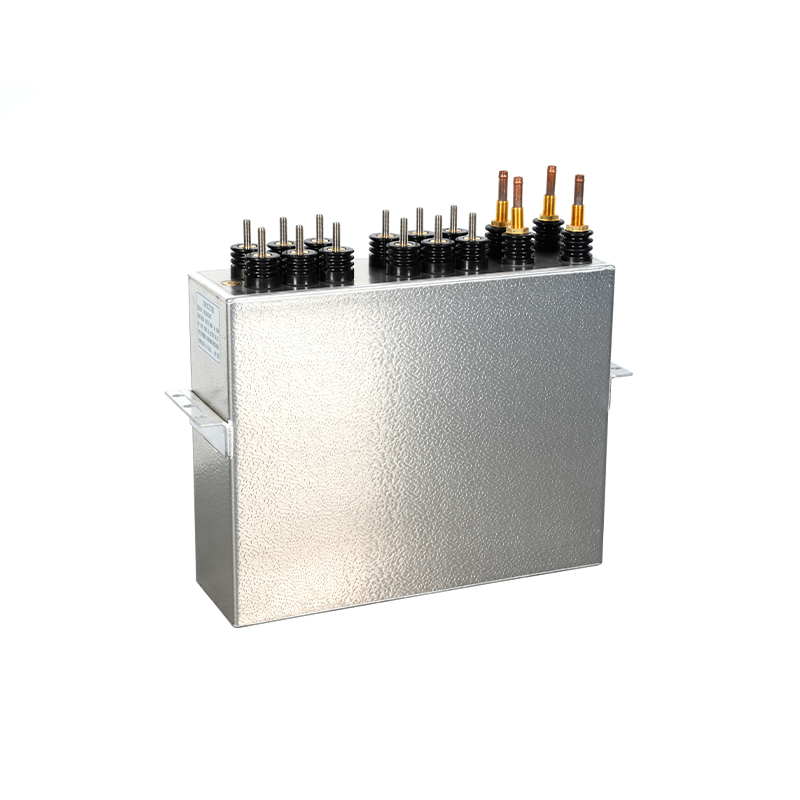
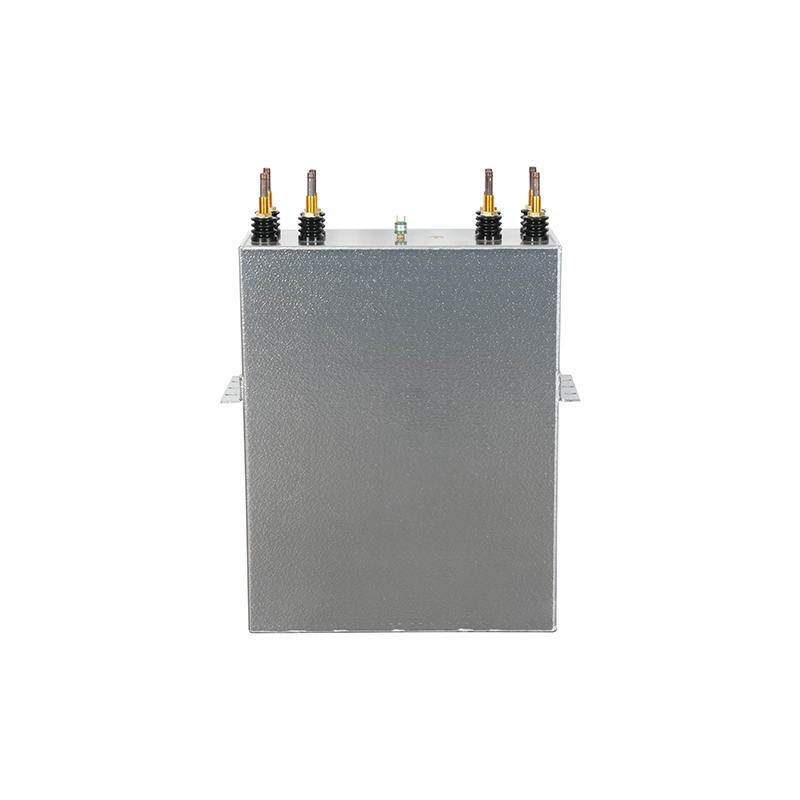 RAM Series High-Frequency Induction Heating and Melting CapacitorA 3.0 kV, 8400 kvar unit at 700 Hz for high-frequency melting and heating lines, with self-healing film and cooled case options.View Product →
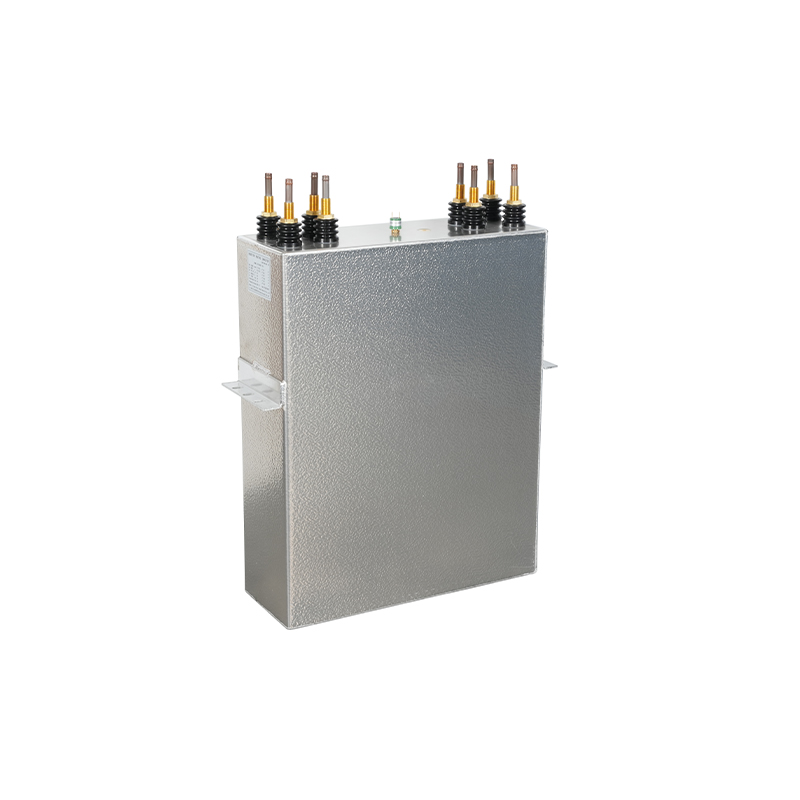 RFM Series Medium-Frequency Induction Heating Power Capacitor3.6 kV, 8000 kvar at 400 Hz for medium-frequency heating systems, supporting power-factor correction and resonant energy transfer with self-healing film.View Product →
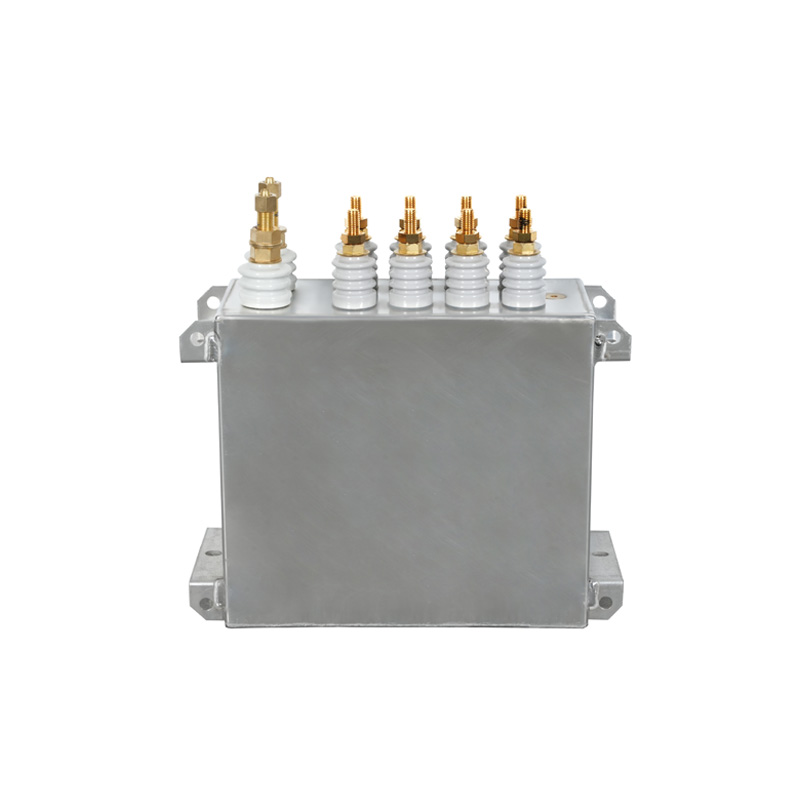 Water-Cooled Induction Heating Capacitor for Continuous Industrial SystemsUp to 3000 V and 8000 kvar with serpentine water cooling, PT100 sensing, and self-healing film for continuous smelting and heat-treatment duty.View Product →
A 150 mm billet is normally heated in the 250 to 1,000 Hz range so the current penetrates deep enough to reach the core evenly. The exact figure depends on throughput and coil design, and the capacitor must be rated for the whole band, not only the working point.
A rated voltage of 1.5 to 2 times the highest RMS voltage measured across the bank is the working rule. Measure at the worst coil condition, because that is where a resonant tank produces its peak voltage and where most undersized units fail.
Only when kvar density and duty cycle allow it. Air cooling removes less heat per unit volume, so a direct swap usually cuts usable rating or shortens life on a continuous billet line, while it often works well on intermittent bar end heating.
No. Usable reactive power depends on the applied voltage, the operating frequency and the cooling available. A smaller unit run inside its ratings delivers more useful support than a larger one pushed past its thermal limit.
Contact Us
News center
information
Tel: +86-571-64742598
Fax: +86-571-64742376
Add: Zhangjia Industrial Park, Genglou Street, Jiande City, Zhejiang Province, China
mobile