Content
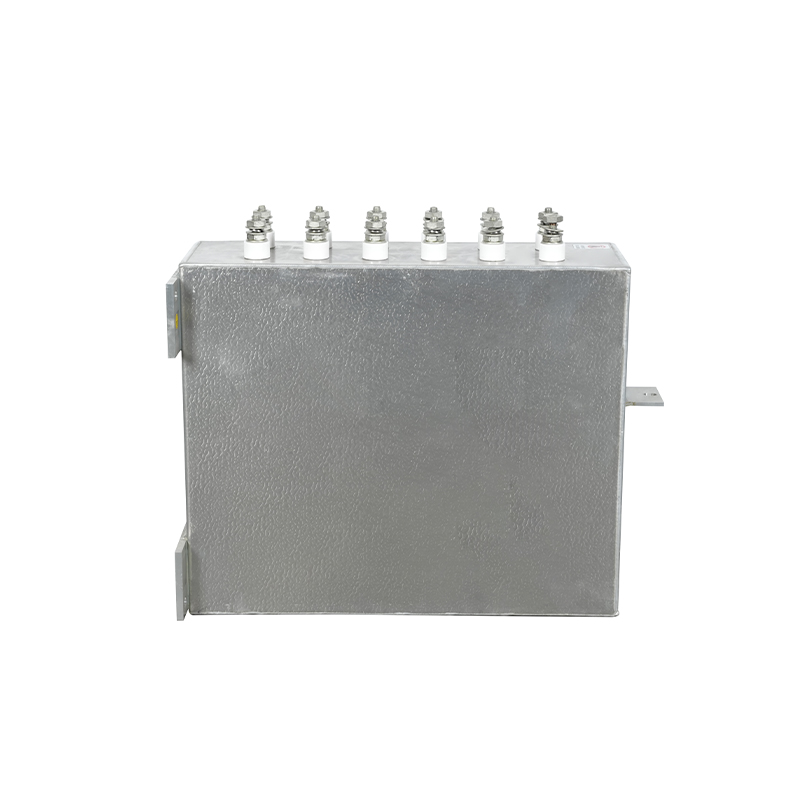
In the demanding world of high-power electronics, from industrial induction furnaces to advanced laser systems and high-frequency RF amplifiers, managing heat is not just an engineering consideration—it's the primary bottleneck for performance and reliability. Standard capacitors, when subjected to continuous high currents and rapid charge-discharge cycles, generate significant internal heat due to equivalent series resistance (ESR). This heat, if not effectively dissipated, leads to accelerated aging, capacitance drift, and ultimately, catastrophic failure. This is where Water Cooled Capacitors come into play as a critical engineering solution. Unlike their air-cooled counterparts, these specialized components integrate a direct liquid cooling path, typically using deionized water, to carry heat away from the core dielectric and foil windings with remarkable efficiency. This article serves as a comprehensive guide to understanding this vital technology. We will explore how they work, delve into critical maintenance topics like identifying water cooled capacitor failure symptoms and how to test water cooled capacitor integrity, and provide a detailed water cooled vs air cooled capacitor comparison. Furthermore, we will examine their quintessential application in systems like a water cooled capacitor for induction heating and address practical concerns such as water cooled capacitor replacement cost. Whether you're a maintenance engineer, a system designer, or simply seeking to understand high-power system architecture, this guide illuminates the role of water cooling in pushing the boundaries of capacitor performance.
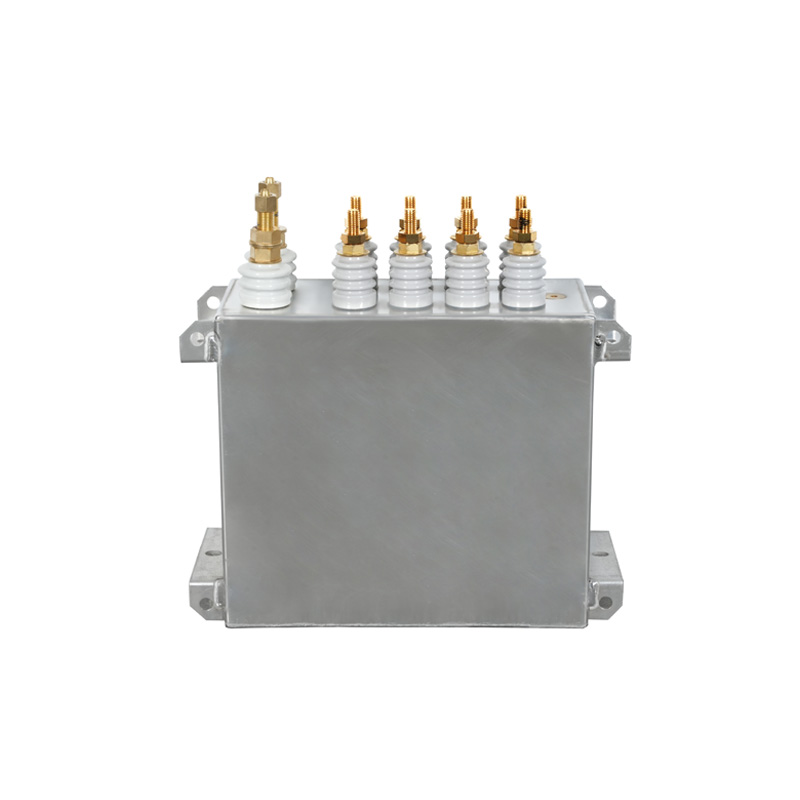
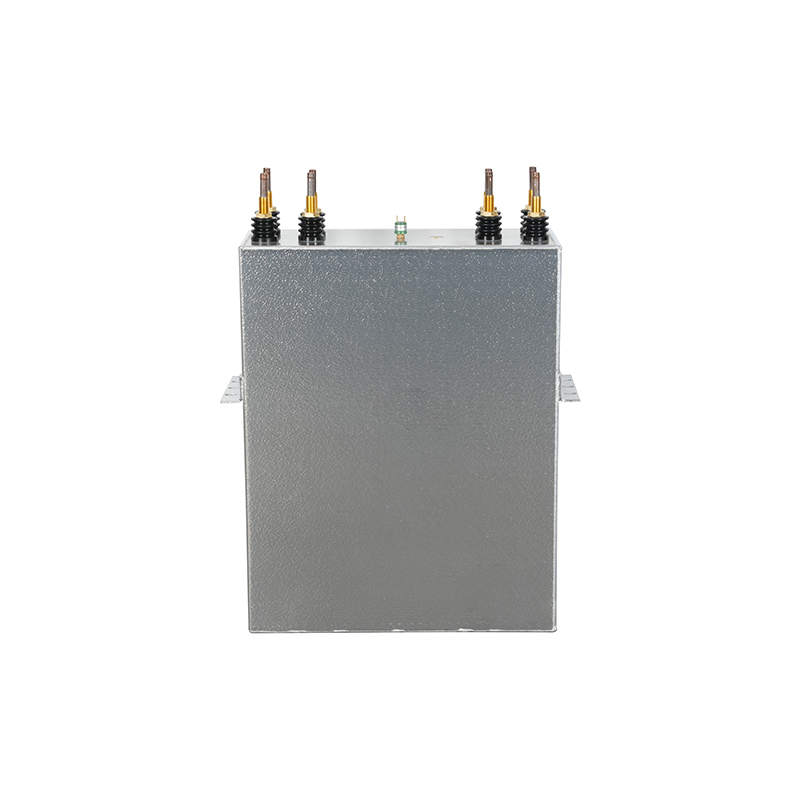
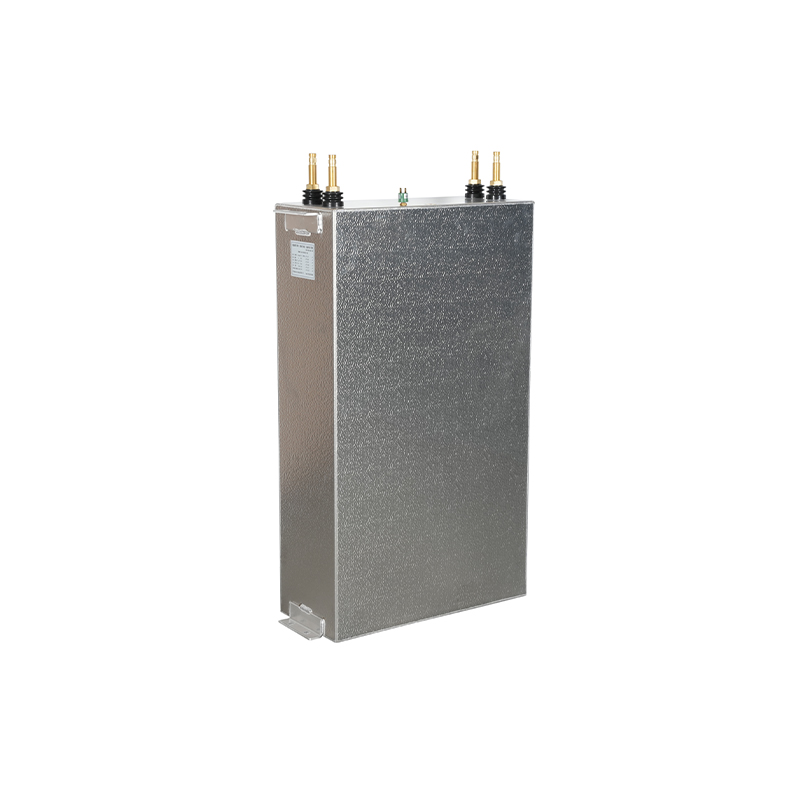
The fundamental advantage of a Water Cooled Capacitor lies in its revolutionary approach to thermal management. In any capacitor, power loss (PL) is primarily calculated as PL = I² * ESR, where I is the RMS current. This loss manifests as heat. Air cooling relies on convection and radiation, which have limited heat transfer coefficients. Water cooling, however, utilizes conduction and forced convection through a liquid medium with a heat capacity about four times that of air and far superior thermal conductivity. This allows the internal heat to be transferred directly from the hot spots—the capacitor's internal foils and dielectric—to the flowing coolant via integrated cooling channels or plates. This direct extraction mechanism prevents hot spots from forming, maintains a more uniform and lower internal temperature, and dramatically increases the component's ability to handle higher ripple currents and power densities without derating. The design is a marriage of electrical and mechanical engineering, ensuring electrical isolation while maximizing thermal contact.
Every capacitor has a maximum allowable hotspot temperature, often around 85°C to 105°C for standard types. Exceeding this temperature drastically reduces operational life; a rule of thumb is that lifetime halves for every 10°C increase in operating temperature. In high-power, high-frequency applications, the heat generated can quickly push a standard capacitor beyond this limit, leading to premature failure.
Proactive maintenance is paramount for systems relying on Water Cooled Capacitors. Failure can lead to costly unplanned downtime and damage to other expensive system components. Understanding water cooled capacitor failure symptoms and knowing how to test water cooled capacitor units are essential skills for operational reliability. Failures can be electrical, mechanical, or a combination of both, often stemming from issues within the cooling system itself. Regular inspection and testing can identify problems in their early stages, allowing for scheduled intervention before a complete breakdown occurs. This section provides a diagnostic framework, moving from observable symptoms to systematic electrical and mechanical testing procedures.
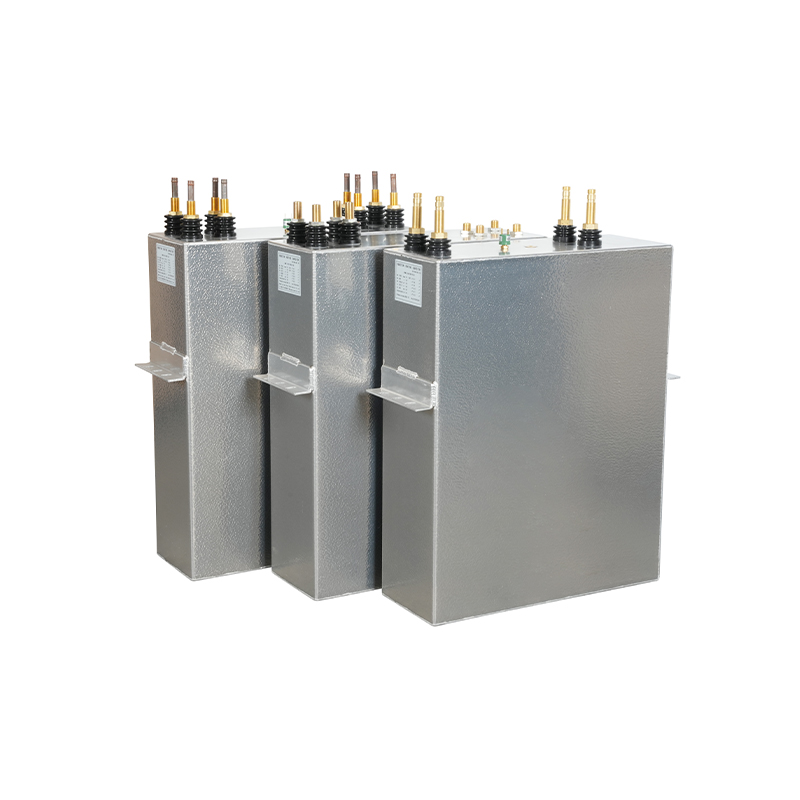
The decision between water cooled vs air cooled capacitor comparison is fundamental to system design, impacting footprint, cost, complexity, and long-term reliability. Air-cooled capacitors rely on ambient airflow, either natural convection or forced via fans, over their casing or dedicated heatsinks. They are simpler, have no risk of leaks, and require less auxiliary infrastructure. However, their heat dissipation capacity is limited by the surface area and the thermal properties of air. Water Cooled Capacitors are the high-performance choice, where thermal loads exceed what air cooling can manage. They offer an order-of-magnitude improvement in heat transfer, allowing for much smaller components to handle the same power, or the same-sized components to handle significantly more power. The trade-off is the added complexity and cost of the cooling loop. This comparison is not about which is better universally, but which is optimal for a given set of electrical and environmental constraints.
Ideal for lower to medium power applications, moderate frequencies, and environments where simplicity and minimum maintenance are priorities. Common in motor drives, power factor correction banks (in well-ventilated cabinets), UPS systems, and some welding equipment.
Essential for high-power density applications: induction heating and melting furnaces, high-power RF amplifiers and transmitters, plasma generators, laser power supplies, and large inverter systems where space is constrained and heat loads are extreme.
| Aspect | Air Cooled Capacitors | Water Cooled Capacitors |
| Cooling Efficiency | Low to Moderate | Very High |
| Power Density | Low | Very High |
| System Complexity | Low (may need fans) | High (pump, plumbing, heat exchanger) |
| Maintenance Need | Low (dust cleaning) | High (coolant quality, leak checks) |
| Initial Cost | Lower | Higher (includes cooling system) |
| Primary Application | General purpose, medium power | High-power, high-frequency, compact designs |
The use of a water cooled capacitor for induction heating is not just common; it is virtually standard for medium to high-power systems. Induction heating works by passing a high-frequency alternating current through a coil, creating a rapidly alternating magnetic field that induces eddy currents in a conductive workpiece, heating it. This process requires a resonant tank circuit, where the induction coil's inductance (L) is tuned by a capacitor bank (C) to resonate at the desired operating frequency. In these systems, capacitors are subjected to extremely high ripple currents at frequencies from kHz to MHz. The resulting I²R losses would cause an air-cooled capacitor to overheat almost instantly under continuous industrial duty cycles. Water cooling is therefore mandatory to handle the thermal load, ensuring stable capacitance (critical for maintaining resonance) and long-term reliability in foundries, forging shops, and heat treatment facilities.
The capacitor bank and the induction coil form an LC resonant circuit. At resonance, the reactive power oscillates between the coil and the capacitors, allowing the power supply to deliver real power (for heating) efficiently. The capacitors must handle this high circulating current.
Understanding the water cooled capacitor replacement cost is a crucial part of total cost of ownership (TCO) for any high-power system. This cost is rarely just the price of the new component. It encompasses the capacitor unit itself, shipping, labor for removal and installation, system downtime (which can be the most expensive factor), and potentially the cost of coolant replacement and system flushing. A proactive maintenance and monitoring strategy, as outlined earlier, is the most effective way to manage and minimize these replacement events. By trending capacitance and ESR data over time, maintenance can be scheduled predictively during planned shutdowns, avoiding the far greater expense of an unplanned failure during production.
Always use deionized (DI) or demineralized water. Tap or distilled water is not suitable. Tap water contains minerals that conduct electricity and cause scaling and corrosion. While distilled water has fewer ions initially, it can become corrosive by absorbing CO2 from the air. Deionized water, with a resistivity typically >1 MΩ·cm, minimizes electrical leakage and galvanic corrosion. A water/glycol mixture is sometimes used for freeze protection, but it must be a non-conductive, inhibitor-rich coolant specifically designed for electronic systems.
Yes, leaks are a potential failure mode and a significant risk. A leak can lead to a loss of coolant, resulting in immediate capacitor overheating and failure. More critically, water leaking onto live electrical components or busbars can cause short circuits, arcing, and extensive damage to the entire cabinet or system. This is why regular inspection of hoses, fittings, and the capacitor casing for signs of moisture or corrosion is a critical part of preventative maintenance.
Maintenance frequency depends on the operating environment and duty cycle. A good baseline includes visual inspections monthly, checking coolant flow and temperature differential quarterly, and performing full electrical tests (capacitance, ESR, IR) annually. Coolant quality (resistivity) should be checked every 6-12 months and replaced or re-circulated through a deionizer as needed. Always follow the manufacturer's specific maintenance schedule.
Primarily, yes. Their complexity, cost, and cooling requirements make them overkill for consumer or commercial electronics. However, they are finding niches in very high-performance computing (HPC) or extreme overclocking, and in high-power amateur radio (ham) amplifiers. Their core domain remains industrial and scientific applications where power density is paramount.
The primary sign is an elevated capacitor case temperature despite the cooling system appearing to run. This can be indicated by system over-temperature alarms, thermal paint changing color, or simply the capacitor being too hot to touch comfortably. A high temperature differential (∆T) between the coolant inlet and outlet (e.g., >10°C) under normal load also indicates the capacitor is generating excessive heat due to high ESR or that coolant flow is too low.
Contact Us
News center
information
Tel: +86-571-64742598
Fax: +86-571-64742376
Add: Zhangjia Industrial Park, Genglou Street, Jiande City, Zhejiang Province, China
mobile


 English
 русский
 Deutsch