 English
 русский
 Deutsch

News
Home / News / Industry News / What Are the Benefits of Using a Water Cooling Capacitor in Modern Electrical Systems?
Content
In the relentless pursuit of efficiency and reliability within modern electrical systems, from vast data centers and industrial drives to advanced renewable energy inverters, thermal management stands as a critical frontier. Excessive heat is the nemesis of electronic components, leading to premature degradation, reduced performance, and system failures. Among the components most sensitive to temperature are capacitors, the essential devices that store and release electrical energy. Traditional air-cooling methods are often insufficient for high-power, high-density applications. This is where the innovative water cooling capacitor technology emerges as a game-changer. By integrating direct liquid cooling into the capacitor's design, these components offer a quantum leap in heat dissipation capability. This article delves into the multifaceted benefits of water-cooled capacitors, exploring how they enhance system longevity, stability, and overall performance, making them an indispensable solution for the next generation of electrical engineering challenges.
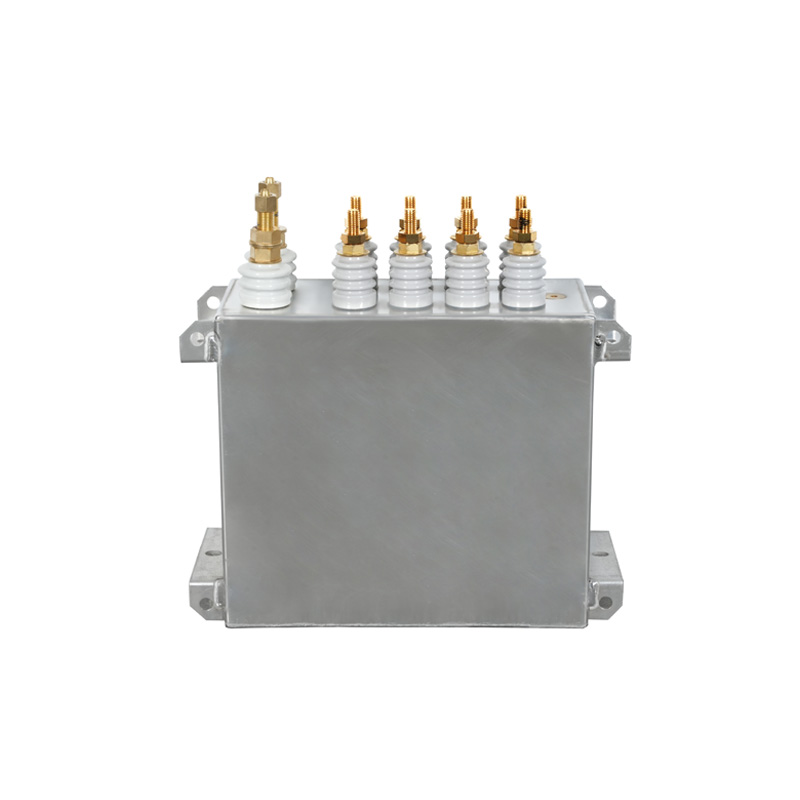
The fundamental principle behind a water cooling capacitor is elegantly straightforward yet profoundly effective. Unlike standard capacitors that rely on passive air convection or forced air fans to shed heat, a water-cooled version incorporates an internal channel or an attached cold plate through which a coolant (typically deionized water or a water-glycol mixture) circulates. This liquid comes into direct or very close proximity with the capacitor's core, the wound metallized film or electrode assembly that generates heat during operation. Water's superior thermal conductivity—approximately 25 times greater than air—allows it to absorb and carry away heat with remarkable efficiency. This direct cooling mechanism targets the heat at its source before it can radiate into the capacitor's casing and the surrounding environment. The technology is particularly transformative for DC link capacitors in high-power inverters, where ripple currents generate significant internal losses. By maintaining a stable, low core temperature, the water-cooled design not only prevents thermal runaway but also allows the capacitor to operate closer to its theoretical electrical limits safely. This foundational shift from air to liquid cooling unlocks a host of performance and reliability benefits that are critical for modern, high-demand electrical systems.
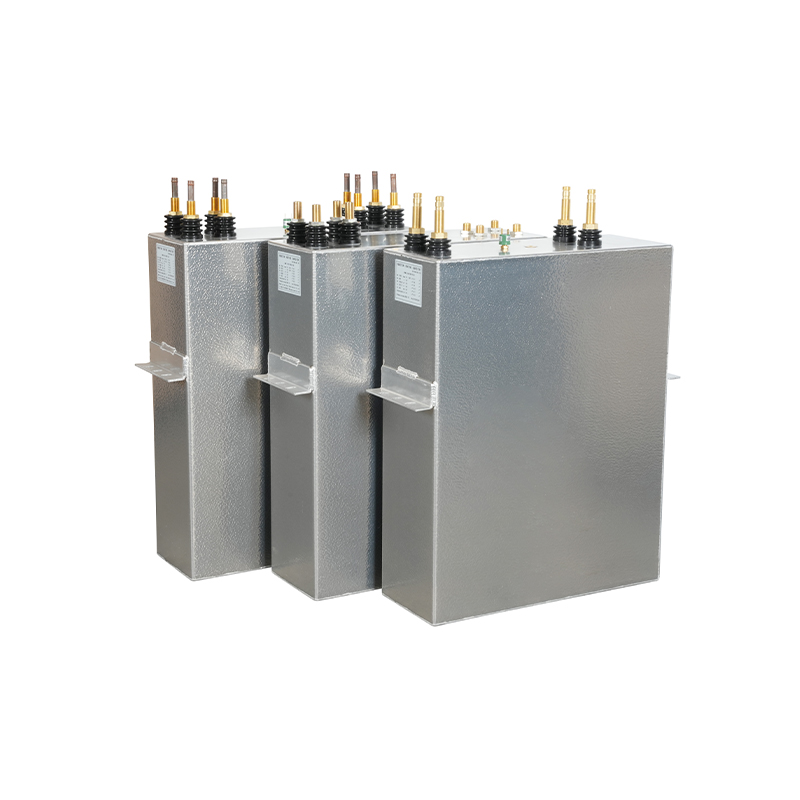
The adoption of water-cooled capacitors brings a suite of tangible advantages that directly address the limitations of traditional cooling methods. The most immediate benefit is a dramatic reduction in operating temperature, which cascades into improvements across every key performance metric. For engineers designing systems like industrial motor drives for heavy machinery, this temperature control is not a luxury but a necessity for uptime. Lower core temperatures directly slow the aging process of the dielectric film, effectively doubling or even tripling the operational lifespan compared to an equivalent air-cooled unit under the same electrical stress. This longevity translates into reduced maintenance costs and lower total cost of ownership. Furthermore, a cooler capacitor exhibits lower equivalent series resistance (ESR), a critical parameter that affects efficiency. Lower ESR means reduced internal power losses (I²R losses), leading to higher system efficiency and less wasted energy, which is paramount in high-power applications. The stability offered by precise temperature control also ensures more predictable capacitance value and electrical parameters, reducing harmonics and improving the quality of power conversion. This is especially vital for the reliability of HVAC power conditioning systems, where consistent performance affects broader building infrastructure.
To fully appreciate the impact of water-cooled capacitors, a direct comparison with conventional air-cooled methods is essential. Air cooling, while simple and low-cost, is fundamentally limited by the physics of air as a coolant. Its low thermal capacity and conductivity mean that to dissipate significant heat, one requires large surface areas (big heat sinks), high airflow rates (noisy fans), and ultimately, a much larger physical volume. This approach becomes exponentially less effective as power levels rise and ambient temperatures increase. In contrast, water cooling addresses these limitations head-on. The following table highlights the critical differences across several operational parameters, demonstrating why the shift to liquid cooling is becoming imperative for advanced applications, including those requiring long lifespan water cooled power capacitors.
| Parameter | Traditional Air-Cooled Capacitor | Water-Cooled Capacitor |
| Heat Transfer Efficiency | Low. Relies on convection; limited by air's poor thermal conductivity. | Very High. Utilizes liquid's high thermal conductivity and capacity for direct heat extraction. |
| Operating Temperature Delta (ΔT) | High. Core temperature can be 20-40°C above coolant/ambient. | Low. Core temperature is typically within 5-10°C of the coolant temperature. |
| Power Density & System Size | Low. Requires large heat sinks and space for airflow, leading to bulky designs. | High. Compact design enables significantly more power per unit volume. |
| Lifespan at High Load | Reduced. High thermal stress accelerates dielectric aging and electrolyte dry-out. | Maximized. Cool, stable operation extends lifespan by multiple factors. |
| Noise Generation | Potentially High due to required high-speed cooling fans. | Very Low. Primary cooling loop pumps are typically much quieter. |
| Dependency on Ambient Conditions | High. Performance degrades sharply in hot environments. | Low. Performance is primarily dictated by the controlled coolant temperature. |
The unique benefits of water cooling capacitor technology find their most valuable applications in areas where performance, reliability, and efficiency are non-negotiable. These are domains where system failure is costly, energy losses are significant, and environmental conditions are challenging. One of the most prominent applications is in DC link capacitors in high-power inverters used for motor drives, renewable energy conversion, and traction systems. In a variable-frequency drive (VFD) for an industrial motor, the DC link capacitor smooths the rectified voltage and handles high ripple currents, generating substantial heat. Water cooling here ensures the drive can operate at full torque continuously without derating. Similarly, in solar and wind power inverters, maximizing uptime and conversion efficiency is directly tied to revenue, making the reliability of cooled capacitors critical. Another growing application is in power conditioning for data center UPS systems, where power quality and density are paramount. As data centers adopt liquid cooling for servers, integrating the UPS and power distribution capacitors into the same cooling loop is a logical and efficient step. Furthermore, in heavy industries like mining or steel production, where ambient temperatures are high and dust can clog air filters, sealed water-cooled capacitor banks provide a robust capacitor cooling solution for high ambient temperatures, ensuring uninterrupted operation of crucial machinery.
Successfully integrating a water cooling capacitor into an electrical system requires careful planning beyond simply swapping out a component. The design process must be holistic, considering the interplay between the capacitor, the cooling loop, and the overall system architecture. A primary consideration is the thermal interface. The connection between the capacitor's cooling plate or channel and the system's coolant manifold must be designed to minimize thermal resistance, often using thermal pastes or pads, and ensure a leak-proof seal under vibration and thermal cycling. The choice of coolant is also critical; deionized water with corrosion inhibitors is standard, but glycol mixtures may be needed for sub-ambient cooling or freeze protection. System designers must also calculate the required flow rate and pressure drop to ensure adequate heat removal without over-engineering the pumping system, which would waste energy. Importantly, while the capacitor itself may have a long lifespan, the supporting cooling system's reliability—including pumps, filters, and tubing—must be equally robust to realize the full benefit. For implementations like power conditioning for data center UPS, redundancy in cooling loops may be as important as redundancy in power paths. Furthermore, monitoring and control systems should include temperature and flow sensors in the cooling loop to provide early warnings of any issues, protecting the valuable power electronics assets.
While the initial unit cost of a water cooling capacitor is higher than that of an air-cooled equivalent, a true evaluation must consider the Total Cost of Ownership (TCO), which often reveals significant long-term savings. The TCO analysis encompasses not just purchase price, but also installation, energy consumption, maintenance, downtime, and replacement costs over the system's operational life. The higher efficiency (lower ESR) of a water-cooled capacitor directly reduces electricity costs, especially in always-on applications. The dramatically extended lifespan means fewer capacitor replacements, reducing both parts costs and the labor for risky, high-voltage system maintenance. Perhaps the most substantial savings come from increased system reliability and prevented downtime. In an industrial or data center setting, an hour of unplanned downtime can cost tens or hundreds of thousands of dollars. The superior temperature management and reliability of water-cooled capacitors, acting as a robust capacitor cooling solution for high ambient temperatures, directly mitigate this risk. Furthermore, the ability to design more compact systems can reduce the overall enclosure and facility footprint costs. When all these factors are modeled over a 10- or 20-year period, the TCO for a system incorporating water-cooled capacitors is frequently lower, making it a financially savvy and technically superior investment.
The lifespan extension is the most significant benefit of a water cooling capacitor. While a standard aluminum electrolytic capacitor in a hot, high-ripple current application might have a lifespan of 5,000 to 10,000 hours, a water-cooled equivalent operating under the same electrical conditions but at a much lower core temperature can see its lifespan extended to 50,000 hours or more. This is governed by the Arrhenius rule of thumb, where every 10°C reduction in temperature doubles the life. Water cooling can easily achieve a 20-30°C reduction, translating to a 4x to 8x lifespan multiplier. For film capacitors, which already have long lives, water cooling ensures they operate at their optimal, derated temperature, guaranteeing they reach their full theoretical lifespan of 100,000+ hours even in demanding roles like DC link capacitors in high-power inverters.
Direct retrofitting is generally not feasible or recommended. A water cooling capacitor is a fundamentally different component, manufactured with an integrated cooling channel or cold plate as part of its hermetic seal. Attempting to add external liquid cooling to a standard capacitor not designed for it would risk leakage, dielectric contamination, and would be highly inefficient due to poor thermal contact. The correct approach for system upgrade is to replace the existing air-cooled capacitor bank with a purpose-designed water-cooled unit. This must be part of a broader system redesign that includes adding a coolant distribution manifold, pumps, a heat exchanger, and controls. The effort and cost are substantial, so it is typically justified only during a major system overhaul or when uprating power and reliability are critical objectives.
While they are most common and provide the greatest relative benefit in high-power (e.g., >100 kVA) and high-density applications, the technology is trickling down to medium-power systems where reliability is paramount. The threshold for considering water cooling is lowering. For instance, in a power conditioning for data center UPS system of 50-100 kVA, or in an industrial motor drives for heavy machinery that operates continuously in a hot factory, water-cooled capacitors offer a compelling advantage. The decision is based on a combination of factors: total system power, ambient operating temperature, required lifespan, physical space constraints, and acoustic noise limitations. If any of these factors are pushing the limits of air cooling, a water-cooled solution becomes a viable and often superior option.
Maintenance shifts from the capacitor itself to the cooling loop infrastructure. The water cooling capacitor unit, being sealed, typically requires no maintenance. The primary concerns are ensuring the integrity and cleanliness of the cooling loop. This includes periodic checks for leaks, monitoring coolant level and quality (pH, conductivity), and replacing particulate filters to prevent blockages. Coolant should be replaced per manufacturer guidelines, usually every 2-5 years, to prevent degradation of inhibitors and growth of microorganisms. Pump seals and bearings are wear items that may need servicing. The key advantage is that this maintenance is often planned and can be performed during scheduled downtime, unlike the unpredictable failure of an overheated air-cooled capacitor. Properly maintained, the cooling system protects the capacitor, enabling its long lifespan.
Water cooling positively impacts key electrical parameters. The most direct effect is on the Equivalent Series Resistance (ESR), which decreases as temperature decreases. A lower ESR means lower internal losses (I²R heating), higher efficiency, and better ability to handle high ripple currents. This often allows the capacitor to perform beyond the ratings of an air-cooled counterpart. Manufacturers may specify higher ripple current ratings for their water-cooled models. The capacitance value also becomes more stable, as temperature fluctuations are minimized. This stability is crucial for precision applications. Importantly, while the core is kept cool, the voltage rating (WV) of the capacitor is not directly increased by cooling; it remains a function of the dielectric film design. However, the reliability at the rated voltage is significantly improved, as thermal stress, a major failure accelerator, is removed from the equation.
Contact Us
News center
information
Tel: +86-571-64742598
Fax: +86-571-64742376
Add: Zhangjia Industrial Park, Genglou Street, Jiande City, Zhejiang Province, China
mobile