Content
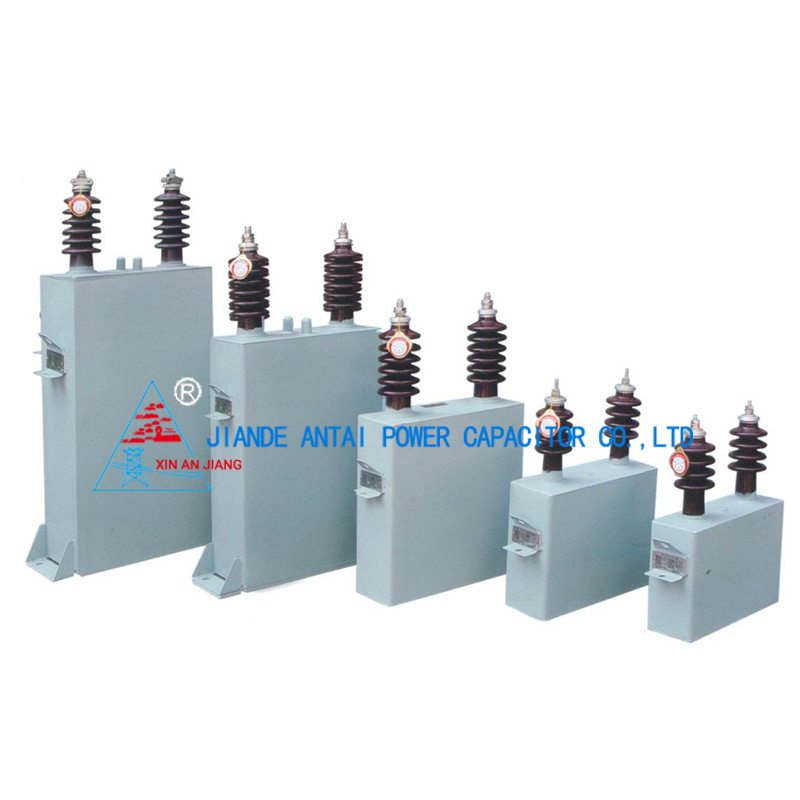
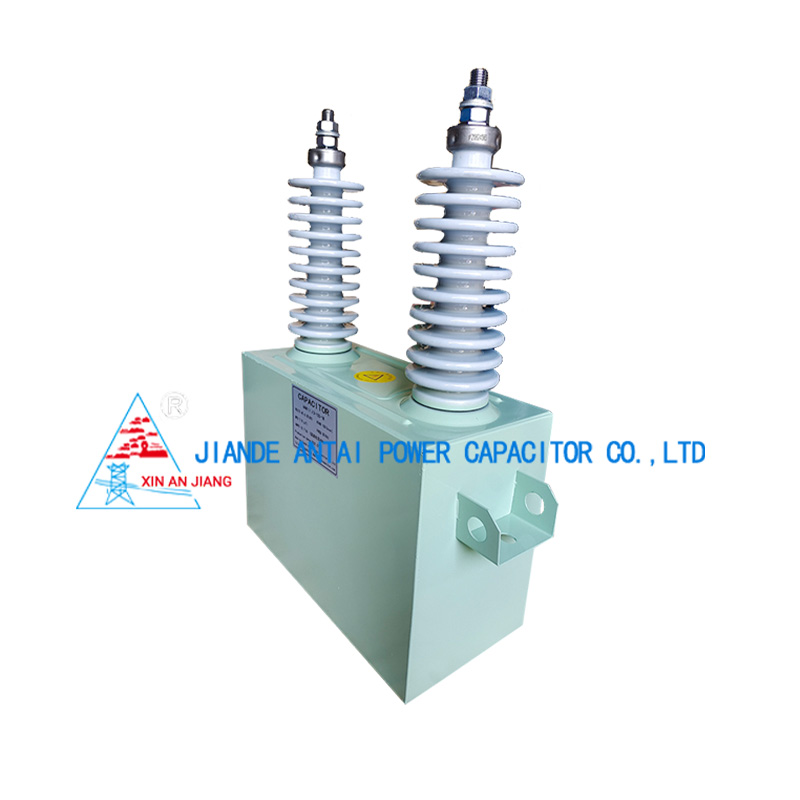
The high voltage shunt capacitor is one of the most fundamental and commercially ubiquitous components in modern power systems — deployed at transmission substations, distribution feeders, industrial plant switchyards, and renewable energy interconnection points worldwide to perform the reactive power compensation that keeps power systems stable, efficient, and economically viable. In a global power infrastructure where reactive power demand from inductive loads — motors, transformers, arc furnaces, and variable speed drives — continuously draws down system power factor and increases apparent power demand, the high voltage shunt capacitor provides the corrective reactive power injection that restores power factor toward unity, reduces transmission losses, frees up network capacity, and avoids the punitive reactive power tariffs that utilities levy on industrial consumers.
Yet the selection, specification, installation, and protection of high voltage shunt capacitors involves a level of engineering complexity that is frequently underestimated by procurement teams approaching the category for the first time. Dielectric technology, voltage ratings, insulation coordination, harmonic environment assessment, protection relay coordination, and capacitor bank switching transient management all interact to determine whether a capacitor installation delivers its intended performance — or fails prematurely through dielectric overstress, resonance-driven harmonic amplification, or protection miscoordination. This article provides a comprehensive, specification-grade analysis of high voltage shunt capacitor technology, designed for power system engineers, substation designers, utility procurement specialists, and industrial electrical engineers making informed sourcing and application decisions.
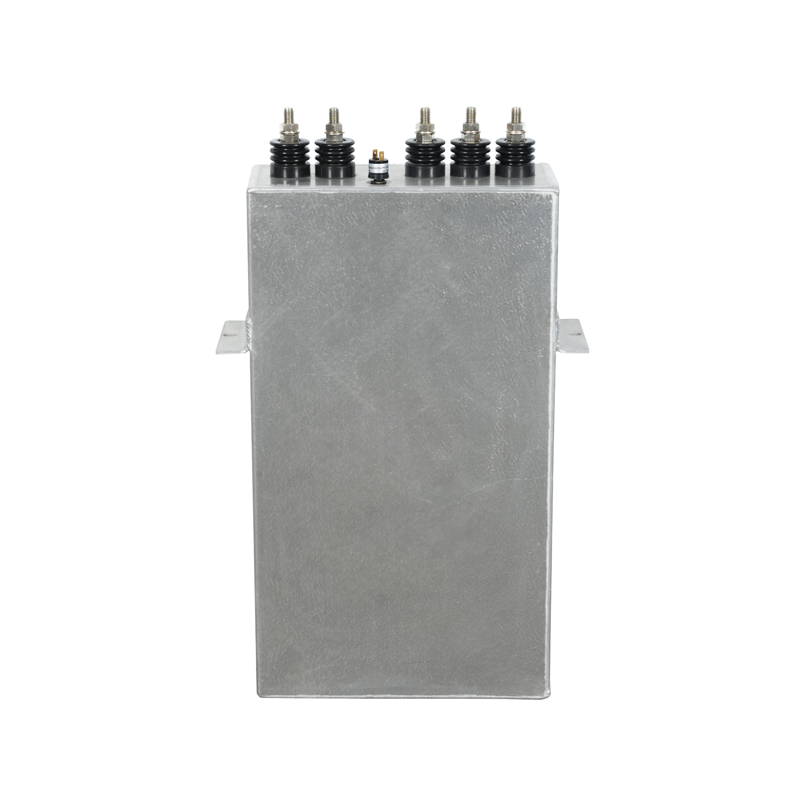
To understand the role of the high voltage shunt capacitor, it is necessary to understand reactive power — the component of apparent power (volt-amperes, VA) that oscillates between the source and load without performing useful work, but that the power system must nonetheless generate, transmit, and manage:
The term "shunt" in high voltage shunt capacitor refers specifically to the connection topology — the capacitor is connected between the phase conductor and neutral (or ground), in parallel with the load and the network impedance. This distinguishes it from series capacitors (connected in series with the line, used for long-distance transmission line compensation) and series resonant capacitors (used in induction heating and power electronics applications):
| Parameter | Shunt Capacitor | Series Capacitor (Line) | Series Resonant Capacitor |
|---|---|---|---|
| Connection | Phase-to-neutral (parallel with load) | In series with transmission line | In series with induction coil |
| Primary function | Reactive power compensation, PF correction | Line impedance compensation, stability | Resonance tuning, power transfer |
| Voltage across capacitor | System phase voltage (6–500 kV) | Voltage drop across line impedance | High circulating voltage (Q × V) |
| Current through capacitor | Reactive current only | Full line load current | Full resonant circulating current |
| Typical voltage class | 1 kV – 500 kV | 100 kV – 800 kV | 0.4 kV – 10 kV |
| Primary application | Substations, industrial plants, wind/solar | Long HV/EHV transmission lines | Induction heating, power electronics |
IEC 60871-1 (Shunt Capacitors for AC Power Systems Having a Rated Voltage Above 1 000 V) is the primary international standard governing the design, testing, and application of high voltage shunt capacitors. Compliance with IEC 60871-1 is mandatory for utility procurement in most countries and is the baseline specification reference for all serious industrial applications:
A credible high voltage shunt capacitor IEC 60871 standard claim requires documented completion of both type tests (performed on representative units to qualify the design) and routine tests (performed on every production unit):
Insulation coordination — the process of selecting capacitor insulation levels consistent with the overvoltage environment of the installation site — is a critical engineering step in high voltage shunt capacitor specification:
Correctly sizing a high voltage shunt capacitor for power factor correction begins with a load flow analysis of the network at the point of compensation. The required reactive power compensation (Q_C, kvar) is calculated as:
Installing a high voltage shunt capacitor for power factor correction raises the voltage at the point of connection — a beneficial effect in distribution networks with voltage drop problems, but a potential constraint in strong networks or at times of light loading:
The configuration of the high voltage shunt capacitor bank installation determines its electrical behavior, protection philosophy, and operational flexibility:
Series reactors (current-limiting reactors) are connected in series with each phase of the capacitor bank for two primary purposes — harmonic filtering and inrush current limiting:
A complete protection scheme for a high voltage shunt capacitor bank installation requires coordination of multiple relay functions:
The dielectric system is the heart of any high voltage shunt capacitor — determining energy density, dielectric loss, thermal performance, and service life. Two principal dielectric technologies are used in modern high voltage shunt capacitors:
Outdoor high voltage shunt capacitor 11kV 33kV units must withstand the full range of environmental stresses over a 20–30 year service life. Key enclosure design parameters:
IEC 60871-1 defines ambient temperature classes for high voltage shunt capacitors. The standard class (Class A) is specified for ambient temperature ranging from −25°C minimum to +45°C (1-hour maximum) and +40°C (24-hour average maximum). For installations outside this range, derating is required:
For utility buyers and industrial electrical contractors sourcing high voltage shunt capacitors from a high voltage shunt capacitor manufacturer China, manufacturing capability assessment should address the following production process quality determinants:
Contact Us
News center
information
Tel: +86-571-64742598
Fax: +86-571-64742376
Add: Zhangjia Industrial Park, Genglou Street, Jiande City, Zhejiang Province, China
mobile


 English
 русский
 Deutsch