 English
 русский
 Deutsch

News
Home / News / Industry News / DC Film Capacitors vs Electrolytic Capacitors for DC Filtering: Technical Comparison
Content
In a 600 kW industrial inverter, the DC link capacitor bank does three jobs: it absorbs the trapezoidal switching current from the rectifier, clamps the bus voltage under load steps, and delivers stored energy during brief mains dips. The capacitor type you choose changes how well those jobs are done. DC film capacitors handle high-frequency ripple with almost no equivalent series resistance, while electrolytic capacitors offer more microfarads per euro but age, and their series resistance climbs. This guide turns that trade-off into an engineering decision you can make on paper.
Jiande Antai Power Capacitor Co., Ltd., the manufacturer behind the DZMJ series, supplies DC film capacitors for industrial induction heating and melting systems where ripple currents reach hundreds of amperes.
A DC link capacitor is the voltage stabilizer between the rectifier and the switching stage, and its impedance at the ripple frequency is what determines bus stability.
The ripple current on a DC link is not random. A 6-pulse rectifier generates 300 Hz ripple in a 50 Hz grid and 360 Hz in a 60 Hz grid. The inverter side adds current ripple at the switching frequency, commonly 8 kHz to 20 kHz. The capacitor must present low impedance at both of these frequencies. In practice, impedance is the result of ESR plus reactive reactance. For a film capacitor, ESR is a few milliohms and ESL is in the nanohenry range, so the impedance stays flat even beyond 50 kHz. An electrolytic capacitor, with its wound aluminum foil and liquid electrolyte, has ESR of tens of milliohms and ESL that already turns inductive near 20 kHz.
The practical consequence is simple: a film capacitor can pass 300 A of 10 kHz ripple while holding the bus voltage ripple below 2%. An electrolytic capacitor of the same microfarad value will heat up, develop a higher ESR, and stop filtering before the ripple frequency reaches 20 kHz.
Metallized polypropylene film capacitors are the first choice for DC filtering when ripple current is high, ambient temperature is extreme, and reliability is non-negotiable.
The dielectric in a DC film capacitor is a polypropylene film with a vacuum-deposited aluminum layer. When a local fault occurs, the metallization around the fault evaporates and restores insulation. This self-healing behavior means a film capacitor does not fail short; it loses capacitance gradually and settles into a safe open-circuit state. That is why a DZMJ 1200V metallized film capacitor with 1850 uF can absorb 300 A of ripple current while holding ESR under 5 mOhm.
Water-cooled film capacitor variants push the ripple rating to several thousand amperes, which is why they are common in induction melting furnace DC links. The film approach also removes the polarity constraint of electrolytic capacitors and eliminates the risk of reverse-voltage damage during commissioning or a control fault.
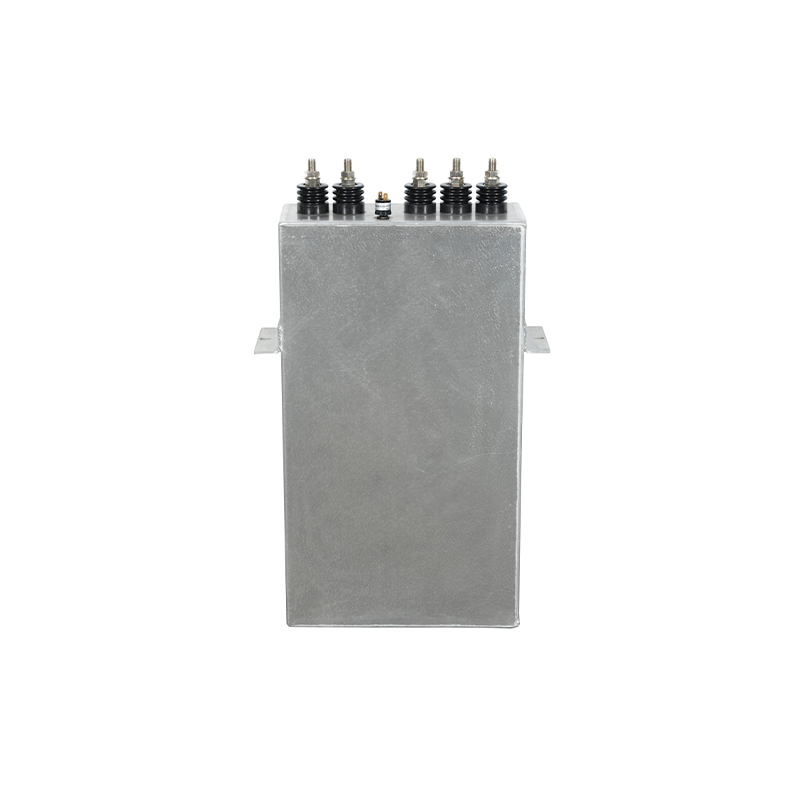 1200V 1850uF Metallized Film DC Filter CapacitorThis 1200V film capacitor with 1850uF stores bulk energy and suppresses current fluctuations in DC links. Its self-healing metallized film ensures stability and long life, making it suitable for demanding industrial control and UPS systems.View Product →
Aluminum electrolytic capacitors still dominate when the design needs maximum microfarads in a small volume and the ripple frequency is low.
An electrolytic capacitor uses an anode foil covered by a thin oxide layer and a liquid electrolyte as the real cathode. This structure gives it the highest capacitance per volume of any common capacitor technology. A 4700 uF 450 V unit fits in a 65 mm diameter can. The downside is the electrolyte. Its conductivity falls as the capacitor ages, so ESR rises, heating increases, and the cycle accelerates.
A rough lifetime rule: the capacitor life halves for every 10 C rise above its rated temperature. An 85 C rated unit running at 95 C with 30% of its rated ripple current may survive only 3,000 to 5,000 hours. That is why electrolytic capacitors are usually the first component to fail in an industrial drive.
When you line up the electrical parameters that matter for DC filtering, film capacitors win on ESR and lifetime, and electrolytic capacitors win on stored energy per cubic centimeter.
| Parameter | DC Film Capacitor | Electrolytic Capacitor |
| Equivalent series resistance | 2-5 mOhm | 20-50 mOhm |
| Ripple current handling | 300-3000 A | 30-200 A |
| Capacitance per volume | Low | High |
| Voltage rating | Up to 5000 V | Up to 500 V |
| Lifetime | 200,000+ hours | 3,000-15,000 hours |
| Failure mode | Open, capacitance loss | Short, vent, leakage |
| Temperature range | -40 to +105 C | -40 to +85 C |
| Polarity | None | Required |
| Cost per uF | High | Low |
The chart above makes the trade-off visible. Film compensates for its lower capacitance density by handling much more ripple current, lasting far longer, and holding a lower ESR. Electrolytic counters with cost and size, which still matter in a 48 V UPS or a low-cost consumer supply.
Film capacitors win wherever the ripple current is high, the voltage is above 1000 V, or the system cannot afford a capacitor maintenance cycle.
The water-cooled DZMJ 1200 V 5000 uF capacitor is an example of a film capacitor built specifically for high-power DC links in induction equipment. It replaces a bank of several electrolytic cans with one component that handles the same ripple.
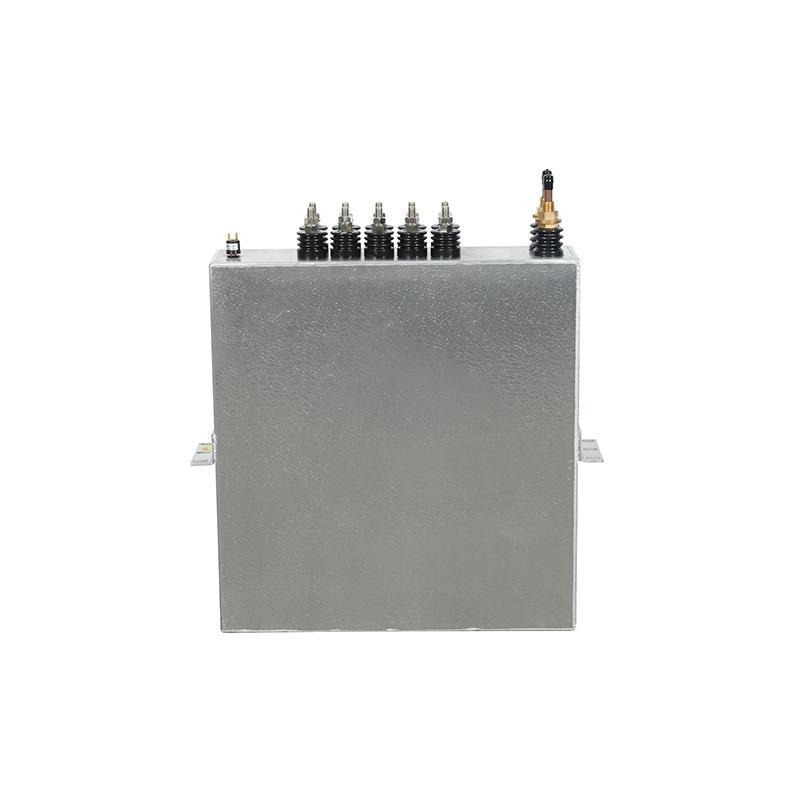 Water-Cooled 1200V 5000uF Film Capacitor for DC LinksDesigned for high-power induction equipment, this water-cooled capacitor handles 5000uF at 1200V with low ESR and ESL. It replaces multiple electrolytic units while maintaining stable temperature and reliable performance.View Product →
The most robust DC filtering solution is a hybrid bank: electrolytic capacitors for bulk energy and film capacitors for ripple rejection.
In a hybrid bank, the electrolytic section carries the low-frequency energy component that maintains hold-up time. The film section is placed either across the bus or with a small series inductance to intercept the high-frequency ripple. The film cap's low ESR prevents the switching ripple from heating the electrolytic cap, which can extend electrolytic lifetime by a factor of 2 to 4.
For example, a 240 kW induction furnace DC link was designed with six 4700 uF electrolytic units and two 5000 uF film capacitors operating in parallel. The film caps absorbed more than 70% of the ripple current at 10 kHz, and the electrolytic caps ran 18 C cooler, increasing their predicted lifetime from 8,000 to more than 28,000 hours.
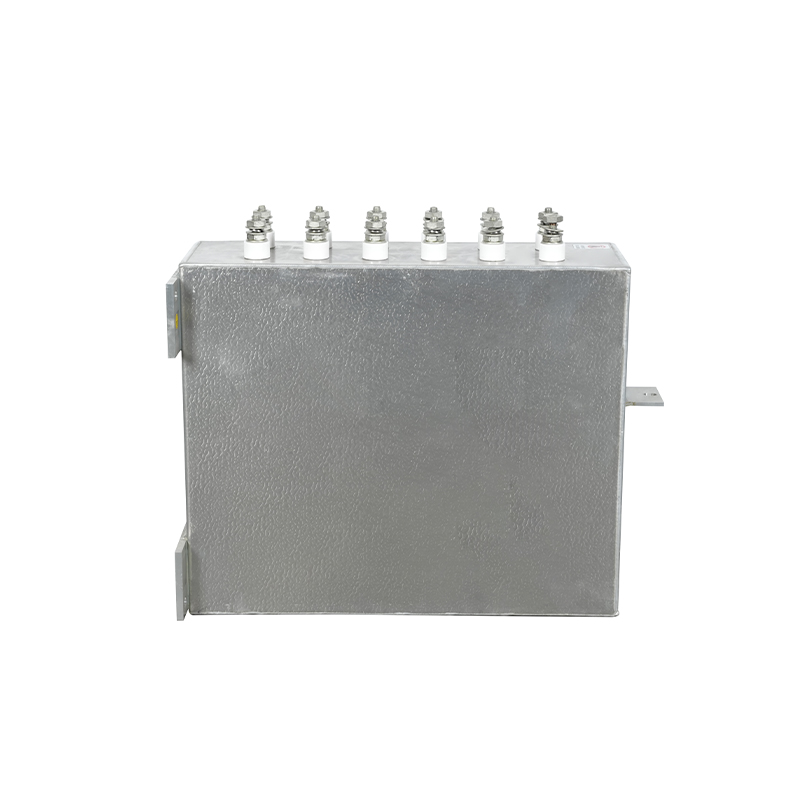 High-Voltage 5000uF DC Filter Capacitor for Ripple SuppressionWith 5000uF and high voltage rating, this capacitor smooths ripple and absorbs pulses in HVDC systems. It enhances efficiency in renewable energy converters and charging stations, reducing harmonic impact and improving stability.View Product →
The relationship between ripple and capacitor heating is explained in detail in the article on ripple coefficient control.
Before you specify a capacitor bank, answer five questions about ripple frequency, ripple current, ambient temperature, voltage, and how much downtime a component can cost.
The DC filter capacitor range at Antai Capacitor covers film, water-cooled, and high-voltage designs for industrial DC links.
Yes, electrically, if you account for the reduction in capacitance. A film capacitor has much lower capacitance per volume, so a direct replacement may require extra physical space. In many cases, you add a film capacitor in parallel with the electrolytic bank instead of replacing it, which gives you bulk energy and low impedance at the same time.
A well-designed polypropylene film capacitor with an internal temperature rise of less than 10 C can exceed 200,000 operating hours. The self-healing dielectric does not dry out and does not degrade through electrolyte loss. The stress that shortens film lifetime is usually mechanical, such as vibration or thermal cycling.
Because the two technologies solve different problems. Electrolytic capacitors store energy; film capacitors remove ripple. Putting both in parallel gives the hold-up time of the electrolytic and the low impedance of the film at high frequency. The film capacitor protects the electrolytic capacitor from ripple-induced heat.
The DC link to ground must be at least 1.2 to 1.5 times the maximum operating bus voltage, and you must also account for the switching overshoot. For a 900 V bus, a 1200 V capacitor is the practical minimum. For a 2000 V bus in induction melting, the capacitor should be rated at 3000 V.
Contact Us
News center
information
Tel: +86-571-64742598
Fax: +86-571-64742376
Add: Zhangjia Industrial Park, Genglou Street, Jiande City, Zhejiang Province, China
mobile