 English
 русский
 Deutsch

News
Home / News / Industry News / Dry-Type vs Oil-Immersed Power Capacitors: Pros, Cons, Applications | Antai
Content
The decision between dry-type and oil-immersed power capacitors comes down to more than a product specification sheet. In a typical industrial power room, an engineer overseeing a capacitor bank replacement has to weigh cooling method, installation footprint, maintenance budget, and environmental compliance before committing capital. Capacitor technology choices directly affect reactive power compensation performance, harmonic filtering behavior, and long-term operational cost.
This guide breaks down the real differences between these two capacitor construction approaches, explains where each one delivers measurable advantages, and offers a practical framework for selecting the right technology for a given application.
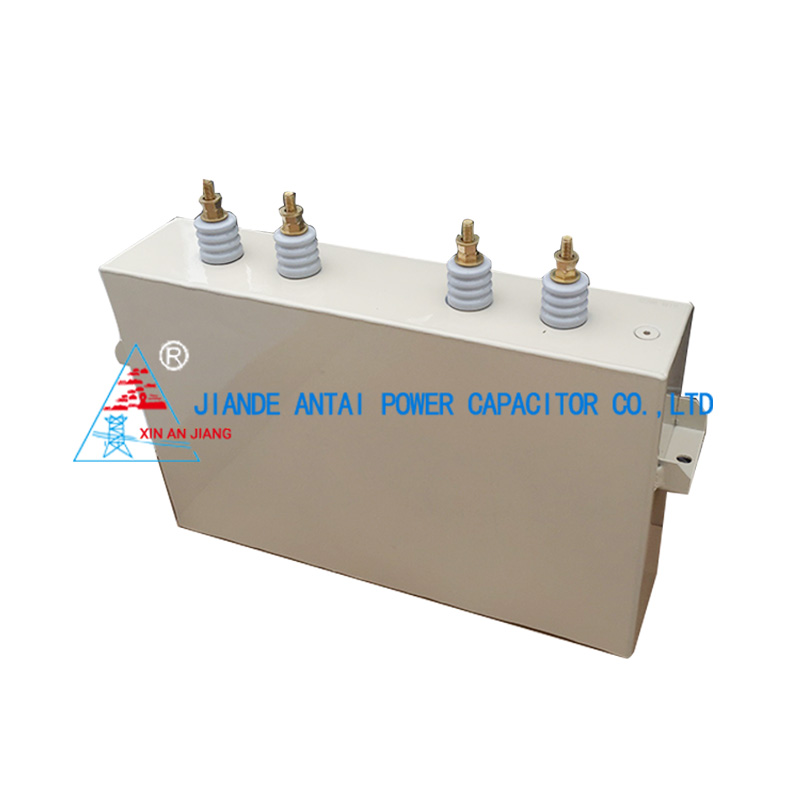
Dry-type capacitors use solid dielectric films, typically metallized polypropylene, with air or inert gas as the surrounding medium. There is no liquid dielectric present, which means no oil leaks, no oil maintenance, and no risk of environmental contamination from a ruptured casing.
In practice, dry-type capacitor banks are significantly easier to maintain. Visual inspection is straightforward because there is no fluid level to check and no oil sampling. For facilities with strict environmental regulations, dry-type units eliminate a major source of compliance risk. In addition, dry-type capacitors have a lower total weight and a more compact design than equivalent oil-immersed units, which simplifies mounting on existing busbars and reduces structural loading on switchgear racks.
Practical point: In indoor substations or enclosed switchgear rooms, dry-type capacitors significantly reduce the emergency scenario risk of oil leakage into sensitive equipment areas.
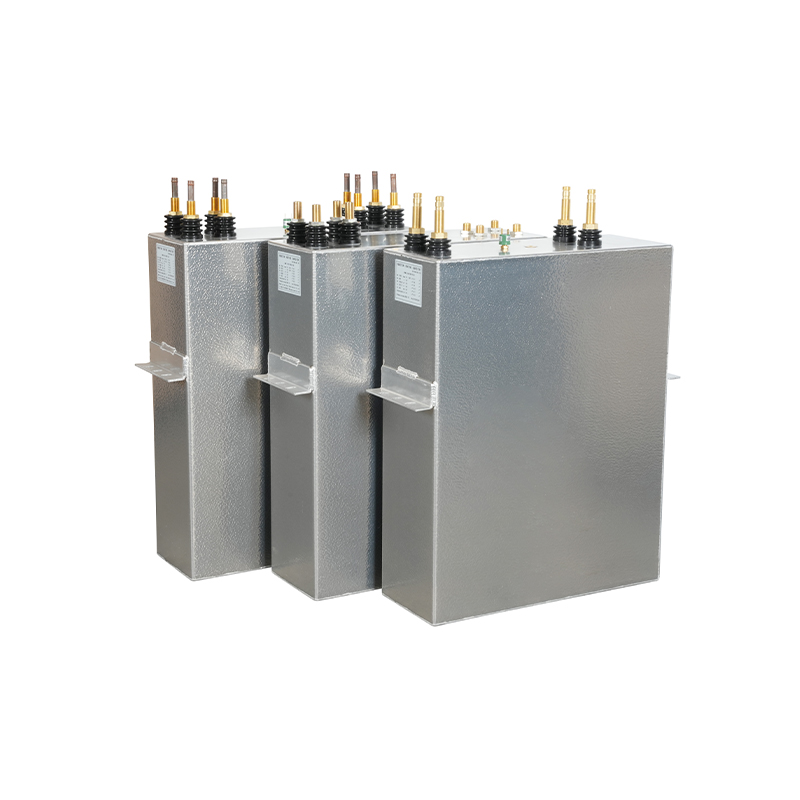
 Electric Heating High-voltage Dry Parallel CapacitorThe electrothermal high-voltage dry-type shunt capacitor is manufactured using advanced materials and technology. It has extremely high capacitance value and low loss ...View Product →
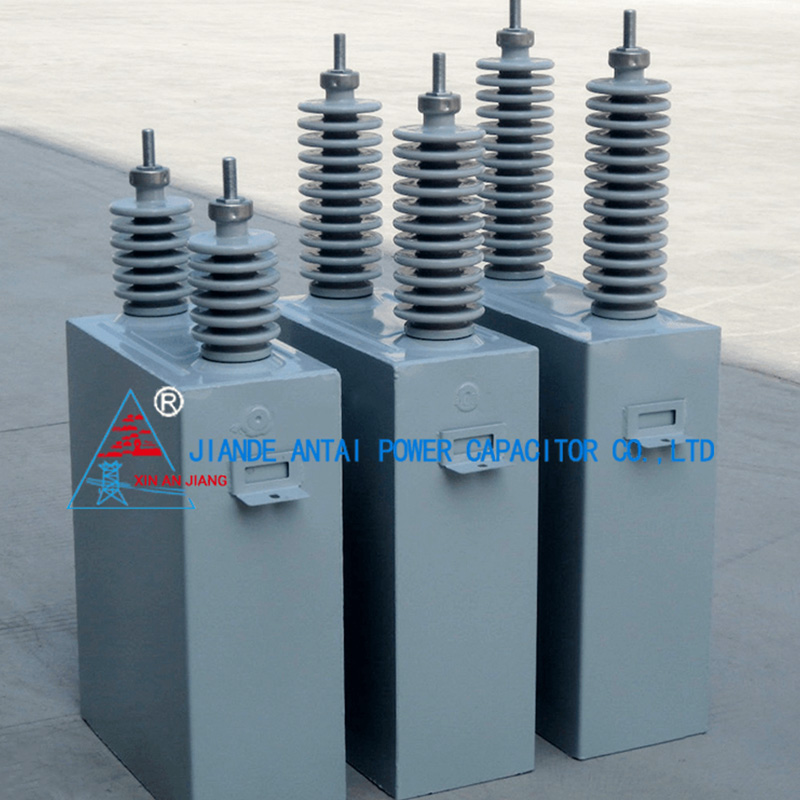
Oil-immersed capacitors place the capacitor film segments inside a sealed tank filled with mineral oil or synthetic dielectric fluid. The liquid medium provides two critical functions: heat transfer from the internal film windings to the outer casing, and electrical insulation between internal foil layers and the grounded tank wall.
This design excels in high-current, high-frequency applications. Oil-immersed capacitors can dissipate heat more efficiently than air-cooled dry-type units, allowing them to deliver higher kvar ratings within a given physical footprint. In heavy-duty applications such as induction heating and melting furnace systems, where operating frequencies range from 500 Hz to 3000 Hz, oil-immersed capacitors handle large reactive power swings with less temperature rise.
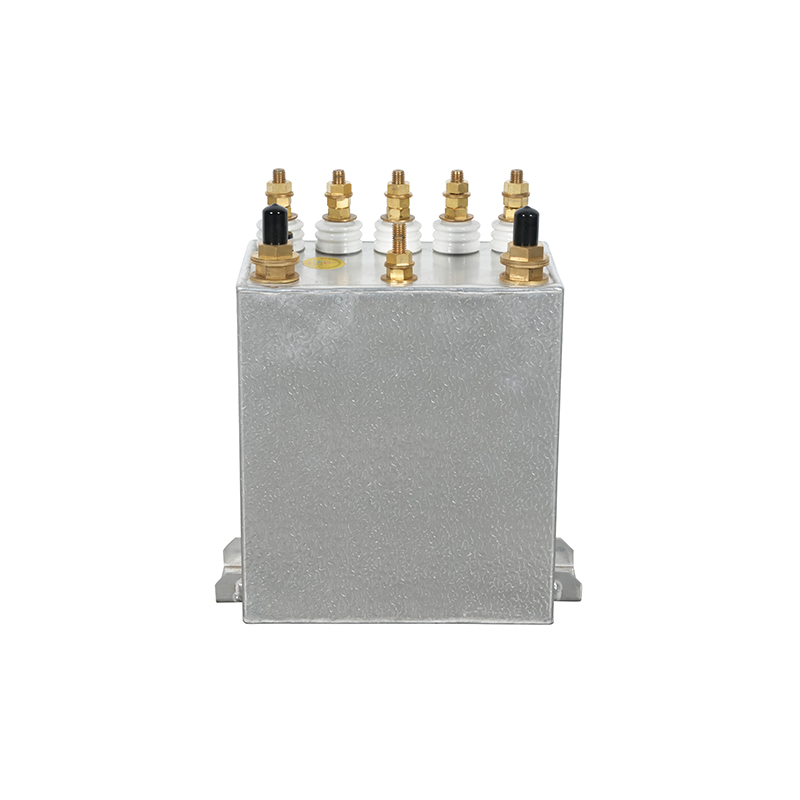
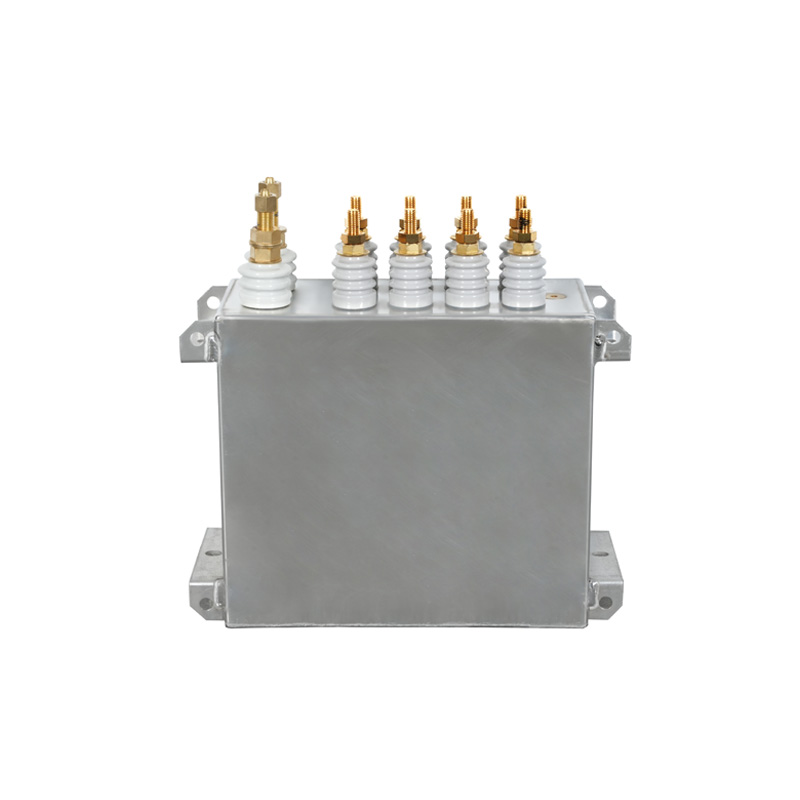 Water-Cooled Induction Heating CapacitorThe water-cooled induction heating capacitor is specially designed for high-power, long-running induction heating systems. By integrating advanced water-cooling heat d...View Product →
To make an informed purchasing decision, engineers need side-by-side data on the criteria that matter most in their specific application. The table below summarizes typical performance characteristics observed in comparable power factor correction applications.
| Comparison parameter | Dry-Type Capacitor | Oil-Immersed Capacitor |
| Cooling medium | Air or inert gas | Mineral oil or synthetic ester |
| Heat dissipation efficiency | Moderate, dependent on casing area and ventilation | High, due to liquid medium convection |
| Routine maintenance | Visual inspection and cleaning | Oil level check, leak inspection, dielectric testing |
| Environmental risk | Low, no fluid to leak | Requires spill containment and disposal planning |
| Installation footprint | Comparable volume for comparable rating | Smaller footprint at high kvar ratings |
| Life expectancy | 8-15 years typical with clean cooling | 10-20 years with proper oil maintenance |
| Initial cost at low voltage | Higher per kvar | Lower per kvar |
| Initial cost at high voltage | Comparable | Comparable |
Relative performance comparison of dry-type vs oil-immersed capacitors in industrial power systems
Data reflects typical industrial installations where the system requires a consistent reactive power compensation. The values are normalized, not absolute, to help engineers assess the relative weight of each factor in the selection process.
Selecting the right capacitor type depends on the operating environment, performance requirements, and the specific characteristics of the load. A facility on a strict environmental compliance schedule will face different constraints than a smelting plant with space limitations and continuous duty cycles.
Dry-Type Strengths
Zero leakage risk, simpler environmental permitting, faster installation, and lower fire hazard. Best suited for medium voltage applications where the switchgear room temperature is controlled.
Oil-Immersed Strengths
Superior cooling at high continuous current, longer service record in harsh industrial environments, and better partial discharge resistance. Best suited for high-frequency induction heating circuits.
When specifying capacitors for a new project or a retrofit, the procurement decision should be based on measurable system requirements rather than general preferences. Below is a practical checklist that helps narrow down the suitable technology.
Yes, but you must verify the busbar rating, mounting brackets, and available heat dissipation. A dry-type unit with the same kvar rating may require more surface area for cooling, so the retrofit usually needs a ventilation review.
Yes. Industrial facilities typically test the dielectric fluid for moisture, dissolved gas, and acidity every 12 to 24 months. Failing to test can lead to premature failure of the capacitor unit.
For most medium voltage applications, dry-type capacitors have lower maintenance costs but a higher upfront price per kvar. Oil-immersed capacitors tend to be cheaper per kvar in large batches but add disposal and environmental compliance costs at the end of service life.
They are used in some lower-power induction heating units, but for high-power melting furnaces with heavy duty cycles, oil-immersed or water-cooled designs are still the dominant choice because they manage heat more effectively.
Contact Us
News center
information
Tel: +86-571-64742598
Fax: +86-571-64742376
Add: Zhangjia Industrial Park, Genglou Street, Jiande City, Zhejiang Province, China
mobile