 English
 русский
 Deutsch

News
Home / News / Industry News / How to Choose the Right Power Capacitor for Industrial Power Factor Correction?
Content
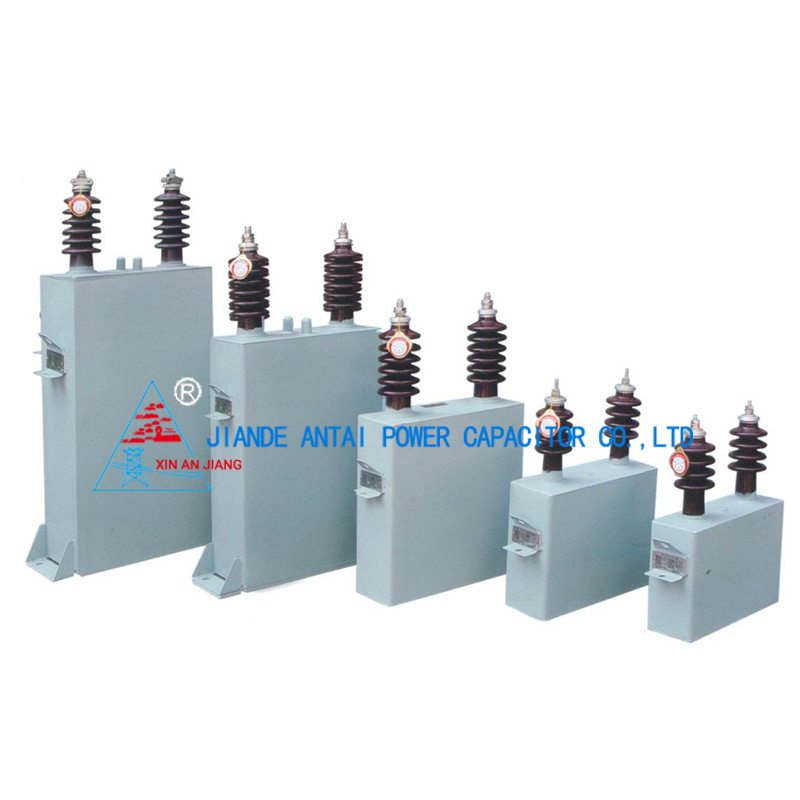
Industrial power systems often suffer from inefficiencies due to a lagging power factor, primarily caused by inductive loads like motors, transformers, and fluorescent lighting. This lagging power factor results in higher apparent power (kVA) for the same amount of real power (kW) doing useful work. The consequences are multifaceted, including increased current draw, higher energy losses in cables and transformers, voltage drops, and potential utility penalties for poor power factor. Power Factor Correction (PFC) is the targeted solution to this prevalent issue. It involves the strategic installation of devices that generate reactive power locally, thereby offsetting the reactive power consumed by inductive loads. This brings the power factor closer to unity (1.0). While synchronous condensers and static VAR compensators exist, the most common, cost-effective, and reliable method for fixed correction is the use of power capacitors for power factor improvement. These capacitors act as sources of leading reactive power, directly counteracting the lagging reactive power. The core principle is that the capacitive reactive current (Ic) is 180 degrees out of phase with the inductive reactive current (Il). When connected in parallel, they cancel each other out, reducing the total reactive current flowing from the utility supply. This reduction in reactive current translates directly into lower total current on the system. The benefits are immediate and substantial: reduced electricity bills by eliminating penalty charges and sometimes even lowering demand charges, increased system capacity by freeing up thermal capacity in cables and transformers, improved voltage stability by reducing voltage drop, and enhanced energy efficiency through lower I²R losses. Selecting the correct capacitor is not a mere accessory choice; it is a fundamental engineering decision that dictates the safety, performance, and longevity of the PFC system.
Choosing a capacitor bank is more complex than simply matching a kVAR rating to a calculated deficit. It requires a holistic view of the electrical environment and the capacitor's construction. A misstep in any of these key areas can lead to premature failure, inadequate correction, or even hazardous conditions.
The operating voltage of a capacitor is its most critical specification. A capacitor must be rated for the system voltage it will encounter, but understanding which voltage to specify is nuanced. Capacitors are typically rated for a specific RMS voltage (e.g., 480V, 525V, 690V). It is a standard and crucial safety practice to select a capacitor whose voltage rating is at least 10% higher than the nominal system voltage to account for normal voltage swings and transients. For example, on a 480V system, a 525V or 480V/525V dual-rated capacitor is commonly employed. Furthermore, one must consider the connection type: is the system single-phase or three-phase? For three-phase systems, capacitors can be connected in delta or wye (star) configuration. A delta-connected capacitor bank sees the full line-to-line voltage, while a wye-connected bank sees the line-to-neutral voltage (which is line-to-line voltage divided by √3). Therefore, the voltage rating of the individual capacitor units must be chosen accordingly. Using a capacitor with an insufficient voltage rating will drastically shorten its life due to dielectric overstress and can lead to catastrophic failure. Conversely, a capacitor rated for a much higher voltage than necessary will be physically larger and more expensive for the same kVAR output, as the reactive power output of a capacitor is proportional to the square of the voltage (QV ∝ V²). If the applied voltage is lower than the rated voltage, the capacitor will deliver less than its nameplate kVAR.
The required total corrective kVAR is determined by analyzing the facility's load profile, typically via a power study or data from utility bills. However, simply installing one large, fixed capacitor bank is rarely the optimal solution for dynamic industrial loads where the inductive load varies throughout the day. This is where the concept of steps for automatic capacitor banks becomes essential. The total correction is divided into multiple smaller capacitor steps, often ranging from 12.5 kVAR to 50 kVAR per step, controlled by a power factor controller (regulator). This controller continuously monitors the system's power factor and switches individual steps on or off as needed to maintain a target power factor (e.g., 0.95 to 0.98 lagging). This granular control prevents overcorrection, which can lead to a leading power factor and potentially dangerous overvoltage conditions, especially during light load periods like nights or weekends. When selecting the kVAR rating for individual steps, consider the base load. One step should be sized to handle the minimum reactive power demand to remain on continuously. Subsequent steps should be sized to provide smooth control; a common strategy is to use a combination of sizes (e.g., 25, 25, 50 kVAR) rather than all identical steps to allow for finer adjustment. The physical configuration—whether the steps are individual wall-mounted units or integrated into a modular, enclosured bank—also affects serviceability and future expansion.
The internal dielectric material defines the capacitor's performance envelope and safety characteristics. The traditional choice has been mineral oil or PCB-filled units, but the latter are banned due to toxicity. Modern industrial capacitors almost exclusively use film-based dielectrics, with two prominent types: dry film capacitor construction and capacitors with non-PCB dielectric fluid.
The following table contrasts the two primary modern dielectric technologies:
| Feature | Dry Film Capacitors | Capacitors with Non-PCB Fluid (e.g., Synthetic Esters, Gas) |
|---|---|---|
| Dielectric | Polypropylene film, often metalized. No liquid. | Polypropylene film immersed in a biodegradable, non-toxic fluid. |
| Key Advantage | Eliminates risk of leakage entirely, maintenance-free, typically lighter weight. | The fluid enhances heat dissipation, allowing for higher current density and potentially longer life under high ripple current/ harmonic conditions. |
| Failure Mode | "Self-healing" property: small dielectric flaws vaporize the thin metalization around the fault, isolating it without catastrophic failure. | The fluid aids in quenching internal arcs and helps in cooling. Some designs are fillable, allowing for field service. |
| Environmental | Very benign; easy disposal. | Fluid is biodegradable and non-toxic, but still requires proper disposal procedures. |
| Typical Application | General industrial environments with moderate harmonic levels. | Harsh environments, high ambient temperatures, or applications with known significant harmonic distortion. |
Beyond the dielectric, integral safety features are non-negotiable. Every capacitor unit must include a discharge resistor that safely reduces the terminal voltage to a safe level (typically below 50V) within a specified time (e.g., 3 minutes) after disconnection from the supply. This protects maintenance personnel. An overpressure disconnector is another critical safety device; in the event of an internal fault causing gas pressure buildup, this device will physically and permanently disconnect the capacitor from the circuit to prevent rupture. For bank-level protection, fuses or circuit breakers sized specifically for capacitor switching (considering inrush currents) are mandatory.
The proliferation of non-linear loads—variable frequency drives (VFDs), switch-mode power supplies, rectifiers, and LED lighting—has made harmonic currents a dominant concern in industrial power quality. These loads draw current in short, non-sinusoidal pulses, injecting harmonic frequencies (e.g., 5th, 7th, 11th, 13th) back into the power system. Standard capacitors, when used in power factor correction, have a dangerously low impedance at these higher harmonic frequencies. This can create a condition of parallel resonance between the capacitor bank and the system inductance (primarily from transformers). At the resonant frequency, the impedance becomes very high, causing massive amplification of the harmonic voltages and currents present. This results in distorted voltage waveforms, overheating and failure of capacitors, transformers, and motors, and nuisance tripping of protective devices. Therefore, a standard capacitor bank applied to a harmonic-rich environment is a recipe for premature failure and system instability.
To safely perform power factor correction in the presence of harmonics, capacitors must be paired with series reactors. This combination is known as a detuned filter or, simply, a detuned capacitor bank. The reactor, connected in series with each capacitor step, is intentionally designed to have an inductance that shifts the resonant frequency of the LC circuit well below the lowest dominant harmonic. The most common configuration is the "7%" detuned reactor. This means the reactor is sized so that the combined LC circuit is resonant at approximately 189 Hz (50 Hz systems) or 227 Hz (60 Hz systems), which is safely below the 5th harmonic (250 Hz or 300 Hz). By doing this, the bank presents a high impedance to the 5th and higher harmonics, preventing resonance and actually providing some attenuation of harmonic currents. This makes detuned power capacitor banks for harmonics the default and highly recommended choice for most modern industrial installations, even if only a moderate level of harmonics is suspected. It is a proactive and protective investment. For facilities with severe harmonic pollution that also require power factor correction and harmonic filtering to meet standards like IEEE 519, actively tuned harmonic filter banks may be necessary. These are more complex systems where the reactor and capacitor are tuned to a specific harmonic frequency (e.g., 5th) to provide a low-impedance path to absorb that harmonic current.
The selection process does not end at the capacitor's specifications; its integration into the electrical system dictates its real-world performance and reliability. Proper installation and protection are what transform a quality component into a robust, long-lasting solution.
Capacitors should be installed in a clean, dry, and well-ventilated environment. Ambient temperature is a key lifespan factor; for every 10°C rise above the capacitor's rated temperature, its operational life is roughly halved. Therefore, avoid installing banks near heat sources like furnaces or in direct sunlight. Adequate clearance around the bank for air circulation is vital. The switching device for capacitor steps—whether it is a dedicated capacitor contactor, a thyristor switch (for no-inrush switching), or a circuit breaker—must be appropriately rated. Standard contactors can be used, but they must be of a design that handles the high inrush current associated with capacitor switching, which can be 50-100 times the nominal current for a few milliseconds. Capacitor-duty contactors have higher making capacity and often include pre-charge resistors to limit this inrush. For very frequent switching or in sensitive environments, solid-state thyristor switches provide truly zero-inrush switching, prolonging the life of both the capacitor and the contactor.
A comprehensive protection scheme is mandatory. This includes:
The expected service life of power factor correction capacitors is typically cited by manufacturers as 100,000 to 150,000 hours (approximately 10-15 years) under rated conditions. However, this life is highly dependent on three core stressors: operating voltage, ambient temperature, and harmonic current content. Operating at or below the rated voltage and within the temperature specification is crucial. The presence of harmonics, even with detuned reactors, increases the RMS current flowing through the capacitor, causing additional internal heating and dielectric stress, which accelerates aging. Therefore, in a well-designed, detuned system installed in a controlled environment, reaching or exceeding the rated service life is achievable. Regular maintenance, though minimal for modern capacitors, should involve visual inspections for signs of bulging, leakage (for fluid-filled types), or corrosion, checking terminal tightness, and verifying the proper operation of the controller and switching sequence.

Selecting the right power capacitor is a systematic process. Use this consolidated checklist to guide your specification and procurement, ensuring no critical aspect is overlooked.
By meticulously working through these steps and prioritizing robust components like detuned power capacitor banks for harmonics, you are not just purchasing equipment; you are investing in a system that will deliver reliable power capacitors for power factor improvement, tangible energy cost savings, and enhanced electrical system stability for years to come. The initial diligence in selection pays continuous dividends in performance and avoidance of costly downtime.
Contact Us
News center
information
Tel: +86-571-64742598
Fax: +86-571-64742376
Add: Zhangjia Industrial Park, Genglou Street, Jiande City, Zhejiang Province, China
mobile