 English
 русский
 Deutsch

News
Home / News / Industry News / Self-Healing in Metallized Film Power Capacitors: Mechanism and Design Trade-Offs
Content
A medium-frequency induction furnace in Zhejiang draws about 8 MW when the local grid delivers a 1.2 kV transient to the capacitor bank. The bank does not fail short. It does not rupture. It does not trip the line. It loses a few tens of picofarads and keeps running. That behavior is the visible result of self-healing technology: a controlled, microscopic clearing event that isolates a dielectric breakdown inside the film. For engineers who specify power capacitors for induction melting, DC filtering, and pulse discharge systems, the mechanism behind that event is a core design parameter. Jiande Antai Power Capacitor Co., Ltd. builds this principle into its metallized film capacitor series, where the coating thickness determines capacitance drift, failure mode, and remaining life.
Self-healing in metallized film power capacitors works by evaporating a small section of the metal electrode through rapid thermal heating, which isolates a local dielectric fault and allows the capacitor to keep operating with a minimal loss of capacitance.
In engineering terms, self-healing is the automatic removal of a localized insulation failure by vaporizing the surrounding metal layer; a failure isolation method that only works when the electrode film is thin enough to clear in microseconds.
The process starts when a weak spot in the polypropylene film breaks down during an overvoltage event or after sustained partial discharge. A plasma channel forms, and the discharge current flows through the thin metal coating. The localized current density heats the metal to evaporation point. At an electrode thickness of 20 to 100 nm, the metal near the fault vaporizes in under one millisecond. The vapor pressure pushes the metal radially outward, producing a clear annulus that cuts off the conductive path through the fault.
| Event parameter | Typical value | Impact on capacitor |
| Electrode thickness | 20 - 100 nm | Sets the clearing energy requirement |
| Clearing area | 1 - 100 sq mm per event | Determines the capacitance loss |
| Capacitance loss per event | 0.001% - 0.1% | Negligible for most power circuits |
| Clearing duration | 0.1 - 1 ms | Limits thermal damage to the winding |
The average clearing event removes less than 0.1 percent of total capacitance. A 10 uF capacitor can survive thousands of events before the drift shows on a meter.
Thinner metallization clears more easily, but it cuts the surge-current rating, so every industrial metallized film capacitor represents a deliberate compromise between clearing reliability and inrush capability.
A 20 to 40 nm zinc-aluminum alloy layer clears with very little energy, which is why it is standard for high-voltage pulse and DC-link capacitors. The same thin layer can be wiped out by an inrush current during energization or by a harmonic burst. A 60 to 120 nm pure aluminum layer carries higher RMS and surge currents, but every clearing event leaves a larger cleared area because the metal needs more energy to evaporate. That is why the same base film is coated differently depending on the application.
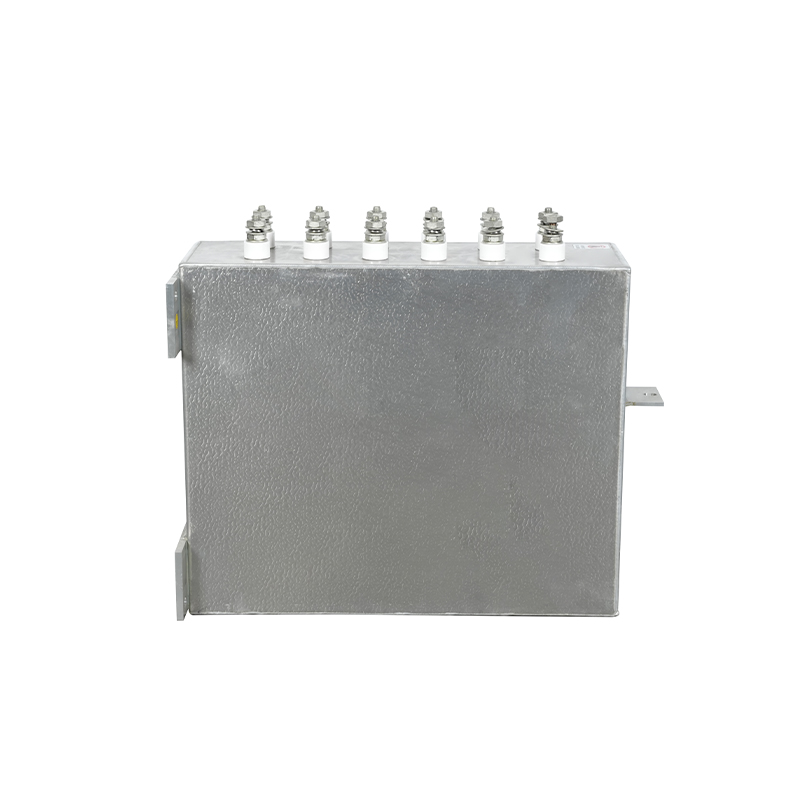
For a 1500 Hz RFM metallized film heating capacitor used in induction furnaces, the coating must carry high RMS current and still clear a grid transient. The final specification includes a maximum capacitance drift after a defined number of clearing events, which is the measurable outcome of the coating thickness decision.
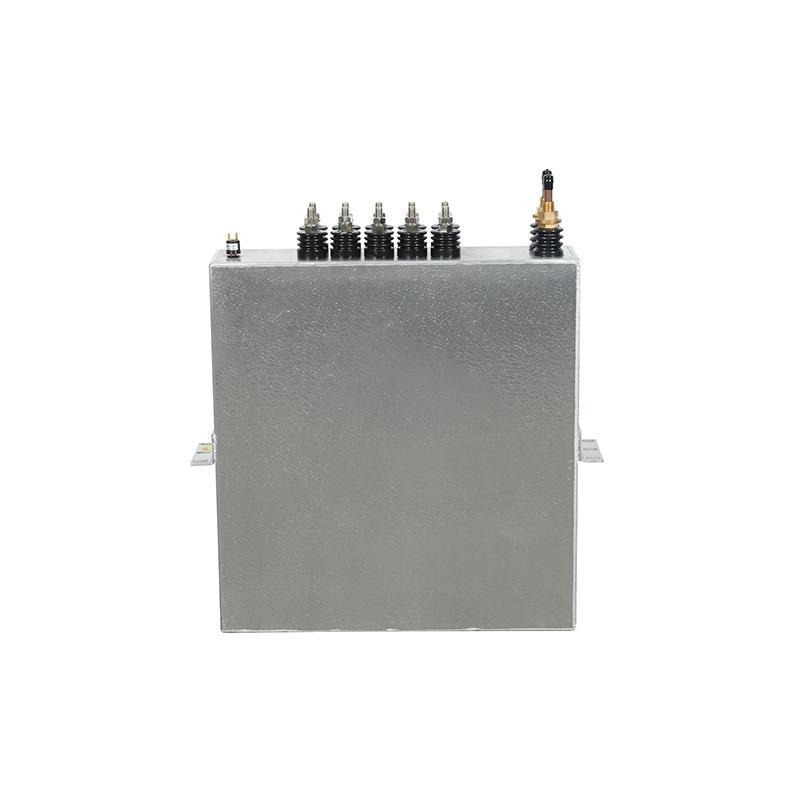
 RFM 3300V 7350kVar Metallized Film Capacitor for 1500Hz Induction HeatingThis high-voltage metallized film capacitor is rated at 3300V and 7350kVar for 1500Hz operation. Its coating design directly influences capacitance drift after clearing events, making it critical for stable induction furnace performance.View Product →
| Metallization type | Typical thickness | Clearing energy | Inrush capability | Typical application |
| Zinc-aluminum alloy | 20 - 40 nm | Low | Moderate | DC link, pulse discharge |
| Pure aluminum | 60 - 120 nm | Higher | High | Induction heating, AC power |
| Heavy-edge aluminum | 100 nm active / 5 um edge | Variable | High | High-voltage shunt |
The electrode segmentation and the margin construction determine how many clearing events a capacitor can survive before its capacitance drifts outside the specified tolerance.
The metallization layer is not a single continuous sheet. It is segmented into isolated blocks. When one block clears, the fault stays inside that block, and the surrounding electrode continues to supply current. This is why a fully shorted capacitor is uncommon in designs that use segmented electrodes and why the standard failure mode is a slow capacitance drift.
The heavy edge is a second control element. The active film area gets a thin coating for self-healing, while the edge that meets the metal spray terminal receives a much thicker metal deposit to reduce contact resistance. Without the heavy edge, a clearing event could propagate along the terminal path and burn a larger section of the winding. Margin control completes the picture. The distance between the metallization edge and the film edge must avoid turning a clearing event into a flashover.
A metallized film capacitor is not qualified by one breakdown test; it is qualified by a conditioning regime that forces hundreds of controlled clearing events before it leaves the factory.
During production, the capacitor is put under a conditioning voltage of 1.2 to 1.5 times rated voltage. Weak points in the dielectric are deliberately triggered. Each event clears a small area, and the manufacturer measures capacitance after the conditioning cycle. If the drift is inside the defined window, the capacitor is stable. If the drift is too large, the capacitor is rejected.
This link between production quality and self-healing behavior is why vacuum coating and aging treatment are discussed together in capacitor manufacturing. The coating process controls the metallization thickness and adhesion, while the aging step stabilizes the film structure and the partial discharge level.
If a clearing event leaves behind a carbon track instead of a clean insulating zone, that track becomes a semiconductor bridge. It heats during operation, raises the dissipation factor, and eventually causes a hard short. A capacitor that cannot clear cleanly is not safe for long-term industrial use.
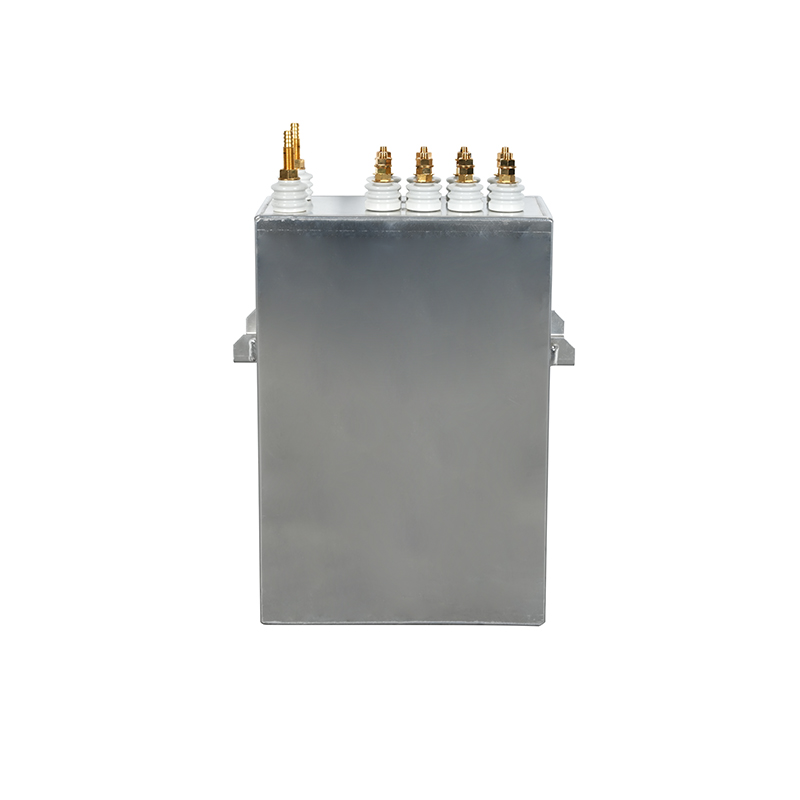
The RAM 1200V 3000Hz electric heating capacitor is an example of a metallized film design that must pass this qualification. Its coating is engineered so that the conditioning cycle produces a stabilized capacitance and a low dissipation factor across the operating frequency range.
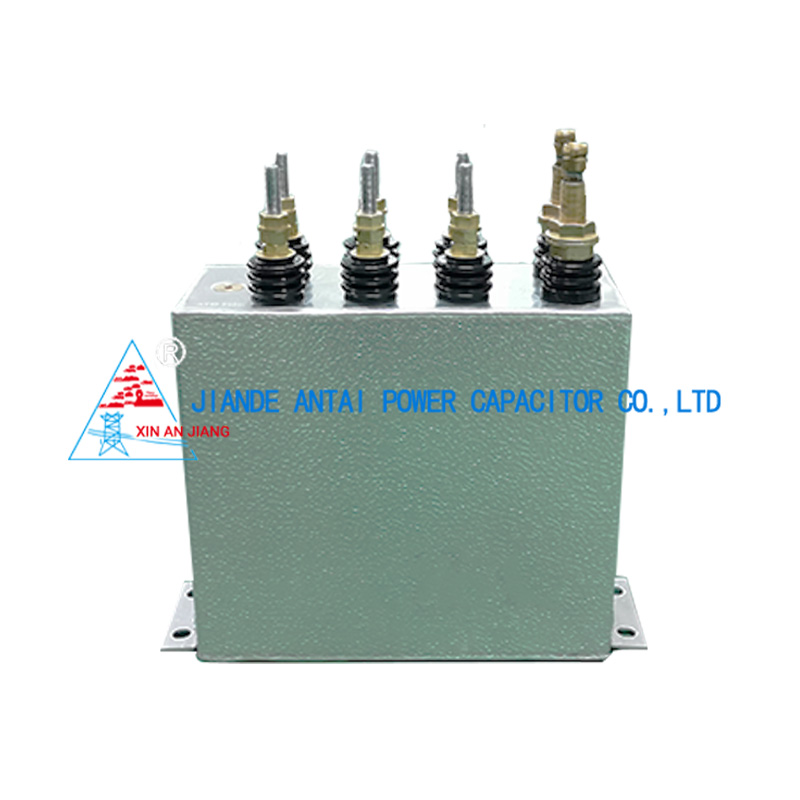 RAM 1200V 3000Hz Electric Heating Capacitor for High-Pressure ApplicationsDesigned for 1200V and 3000Hz, this metallized film capacitor supports self-healing reliability in HVAC and DC-link circuits. Its optimized coating ensures low dissipation factor after conditioning cycles.View Product →
For induction heating and DC-link applications, self-healing is the reliability mechanism that allows a capacitor to pass through grid transients and load surges without an operator replacing it.
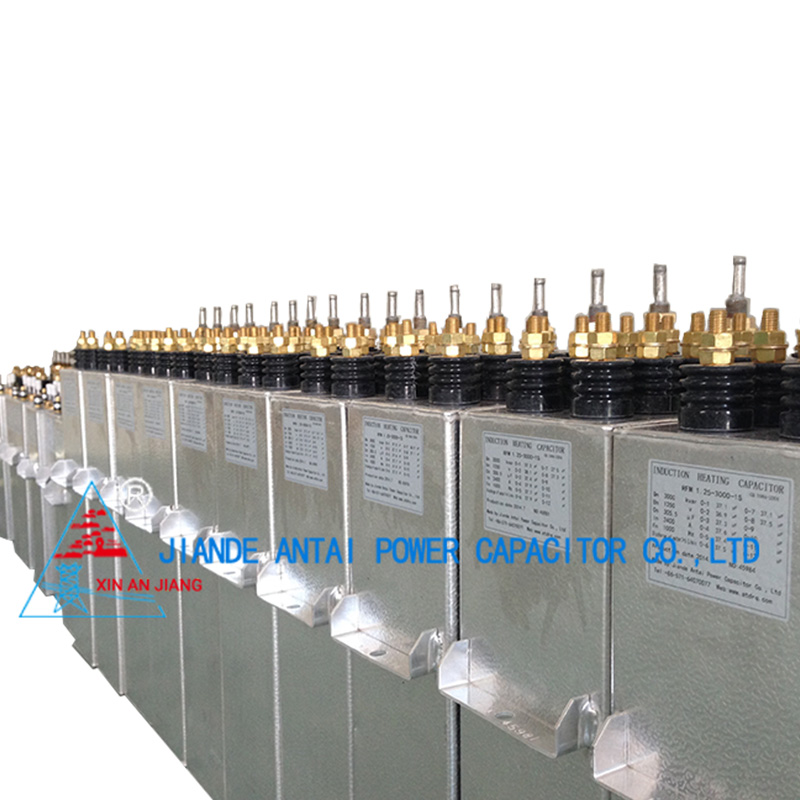
In an induction melting furnace, the capacitor bank sees load surges, harmonics, and grid disturbances daily. Each disturbance can trigger one or more clearing events. A well-designed self-healing capacitor survives thousands of these events, which is why RAM and RFM heating capacitor series are specified with a maximum capacitance drift after an accelerated clearing test.
In a DC filter circuit, the capacitor carries a DC component with a ripple waveform. The same clearing principle protects the capacitor from irregular voltage events on the DC bus. A DZMJ metallized film DC filter capacitor relies on the clearing mechanism to ensure that a fault degrades gracefully instead of turning into a catastrophic short that takes down the rectifier.
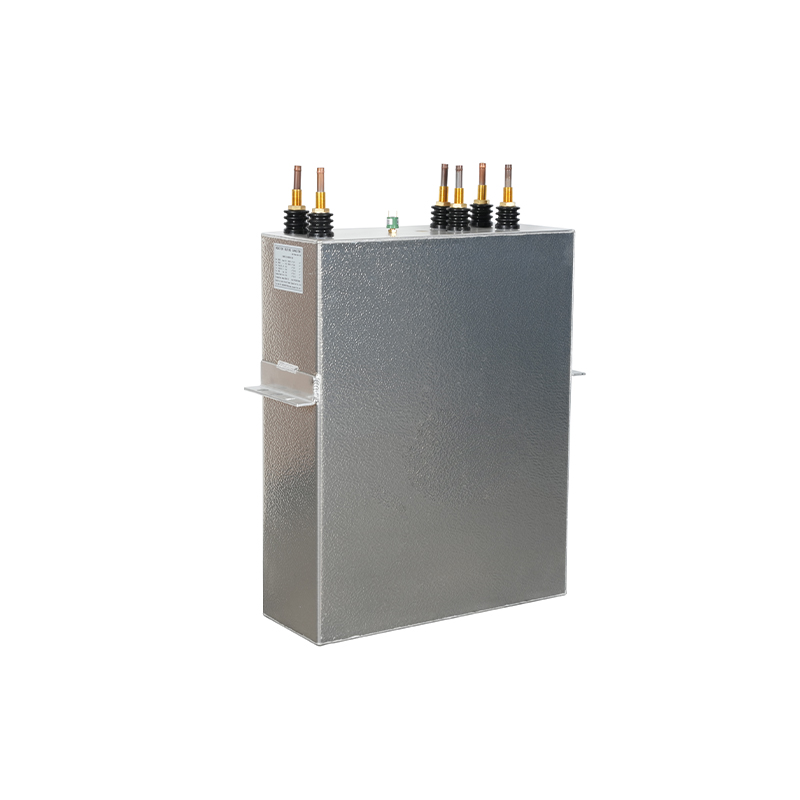
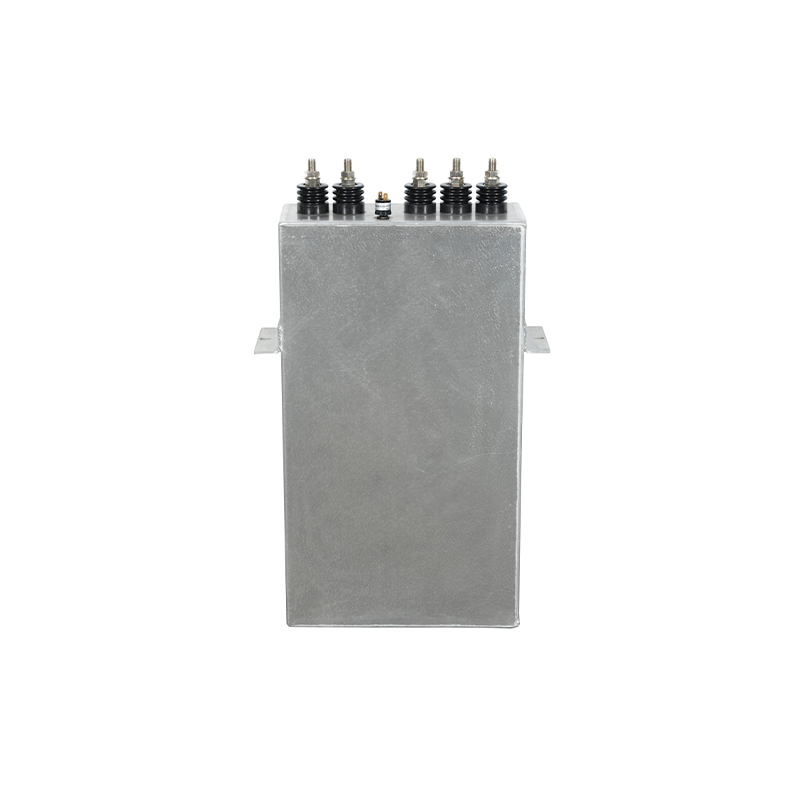 DZMJ 1200V 1850uF DC Filter Capacitor with Metallized FilmThis 1200V, 1850uF DC filter capacitor uses metallized film for self-healing and stable capacitance. It helps manage ripple and transient events on DC buses, ensuring graceful degradation in rectifier systems.View Product →
Each clearing event removes between 0.001% and 0.1% of the total capacitance. A well-designed industrial capacitor can withstand thousands of events before the capacitance drift becomes measurable. Manufacturers usually define an end-of-life criterion such as a 5% capacitance drop.
Yes, but only by a small amount. A single event clears 1 to 100 sq mm of electrode area. For a winding area measured in square meters, the loss is in the parts per million range. Only after thousands of events does the loss appear on a standard capacitance meter.
Self-healing is an open-circuit clearing event that isolates a fault. A hard short circuit is a failure where the clearing does not interrupt the current path, typically because the electrode is too thick, the clearing energy is too high, or the cleared area is too small.
Measure the capacitance and the dissipation factor. If the capacitance has dropped by more than 5% or the dissipation factor has increased, the capacitor has reached the end of its useful self-healing life. Replace it before it fails short.
Contact Us
News center
information
Tel: +86-571-64742598
Fax: +86-571-64742376
Add: Zhangjia Industrial Park, Genglou Street, Jiande City, Zhejiang Province, China
mobile